Showing posts with label Georg Hegel. Show all posts

The Full Implications of Empiricism, Research Time, 08/04/2018

Follow the logic of a position through to its natural conclusion. This isn’t always done. Usually, when you’re talking to other philosophers, it never gets done because someone sidetracks the story with a question, interrupts, and swings things in a totally different direction.

Usually the direction of their own work. I’ve been there. I’ve done it before, unfortunately for my trying to avoid hypocrisy. But I don’t want to do it anymore.

What seems like ordinary beauty in art to us today, was a revolution
that enraged people with its provocative smashing of aesthetic rules
taught as universals. Could art be beautiful if it wasn't faithfully
realistic? We don't ask that question now.
Henri Matisse, Still Life With Lemons
So the other day, I wrote a few quick remarks about Gilles Deleuze’s critique of Hegel. Well, not Hegel per se. But the idea that was at the core of Hegel’s work, and which so profoundly influenced so many thinkers in the society where Deleuze lived – mid-20th century France.

The real is the rational. Reality has the same fundamental structure as human rationality. Begin by understanding the simple and arrive at the complex, until at last you’re able to comprehend all the complexity the world can possibly offer you.

There’s another aspect of this way of thinking as well – your attitude to universal knowledge. When I say universal knowledge, I mean questions, answers, and inquiries to questions like “What is beauty?”

Plato’s most famous dialogues are prime examples. I’ve met enough students and professors who see philosophy as a discipline to be about discovering the answers to the questions that Plato never could discover.

Let’s leave aside the most obvious critique of this idea – that aporia was the point of any inquiry into a universal question like “What is beauty?” and “What is justice?” Questions that aren’t supposed to have answers, that aren’t built to be answers, but to encourage thinking.

So that's aporia. You want to explore more of that, go read some Jacques Derrida. I’d recommend starting with a really short book he wrote called Aporias. Surprise surprise.

Deleuze explores a different aspect of these universal questions. Universal questions are fundamentally general – You search for a concept that holds across all cases. The problem with such a project is that it presumes the structure of human rationality as it is will extend legitimately over all of existence.

You want to buy Plato to wear on your chest?
If I can use some insider’s imagery to describe the attitude – you presume that a thinker doesn’t have to leave his armchair to figure out all the great truths of existence.

What does that presumption mean? That the powers of human rationality are already complete. And that’s a very presumptuous presumption.

Empiricism is a perspective of epistemic humility – we’re humble about the powers of human knowledge. Acknowledge that we’re contingent creatures whose power to think is pretty remarkable and kind of amazing, but that arose from conditions that resulted in some biases and blindnesses.

Humans aren’t perfect. Humans have a lot to learn about how our knowledge can develop, a lot of new powers that can help us live better in our world. What are those powers? I have a few ideas, and I’ve talked about them before. But you can only figure out what those powers are or can be if you investigate the world.

I’m going to go back to Plato for this illustration, because of the power Plato holds over philosophical thought for the Western tradition. I mean, Plato is the only person of whom the entire tradition has been described as a series of footnotes to his work. I love a lot of the ideas of Alfred North Whitehead, but I think his Oxbridge cultural conservatism was showing a little too much here.

A lot of Plato’s dialogues start with Socrates challenging the adequacy of everyday thinking about complex concepts – beauty, justice, piety, love, etc. Somebody frames their thinking in terms of asking, for example, what things are beautiful.

Socrates’ character is right to call these questions inadequate to the task. The question “What things are beautiful?” doesn’t explore why we think those things are beautiful in the first place. So you have to explore “What is beauty?” before you can figure out what things truly are beautiful. You have to understand the general categories before you can start building your taxonomy.

Marcel Duchamp was one of the most progressive
artists of the last century because of how he
purposely challenged the notion of what could
even count as art, let alone what counts as
beautiful. His work didn't even try to be beautiful,
and so ended up redefining whole new ways to
think about art and beauty.
This aspect of Plato’s influence has severely limited how empiricism could develop in the Western tradition, because it frames any investigation of the world as requiring complete general knowledge to get off the ground and guide itself.

But this critique doesn’t kill empiricism, as too many over the last 2500 years have thought. It forces empiricism to get serious. Let’s lay out how the model questions should go.

Uncritical Empiricism: “What things are beautiful?”
General Questions: “What is beauty?”
Contingent Empiricism: “What can this show me about beauty?”

The general question is how rationalism can inform empiricism. But having been so informed, an empiricism that follows this more nuanced logic to its endpoint will understand the contingency of its questions.

Ask what the world can show you about your concepts, your terms, your categories. A contingent approach to empiricism is how knowledge can progress. Our knowledge can become more complete, can approach completeness.

But total completeness isn’t an achievable goal – it’s an asymptote, an attractor. We improve by using progress toward completion as our guide, but understand that only God can ever be complete. We, in contrast, can be better.

Always Already Complex, Research Time, 06/04/2018

It’s been a rough few days, as you can tell when I can’t squeeze out even a short therapeutic blog post in the middle of the week. But I’m feeling better, though I’m still wrangling together all the details of moving apartments – I hope to one I'm working on just around the corner.

But I want to get back to some conceptual stuff. Once I move apartments and I’m better organized, I can give some more detailed updates on professional developments. I’ve had some, and they’re pretty alright. That’s as far as I’m going for now.

So earlier this week, I was talking a bit about Gilles Deleuze and Georg Hegel. Plenty of people have too, and one of them was Michael Hardt. He makes Deleuze’s conceptual wrestling match with Hegel the pivot of his book.

What's the problem Deleuze had with Hegel? It’s the same one I have with Hegel. And I admit that it was Deleuze’s criticisms that made me realize what a big problem this is for thinking. It’s over the nature of what kind of difference is the most fundamental, ontologically speaking.

Art by Everett Patterson
Put in really, really, really simple terms – Hegel prioritizes stark contradiction. A or not-A. Or as he lays it out in the Logic, Being or Nothingness. What makes this kind of contradiction so stark is its simplicity and its abstractness.

And yes, by the time you work through the Logic, you’ve reached a state of knowledge that can be adequate to all the material complexity of the world. But complexity is the end product of a long conceptual development.

It prioritizes simplicity from a fundamental ontological perspective. Human reason tends to work from simplicity to complexity. We’re at first only able to understand really simple concepts, and eventually figure out greater complexity, nuance, the world’s messiness, multiplicity, and chaos.

That last part is the big problem Deleuze had with the Hegel-influenced and Hegelian way of thinking. Humans have to learn complexity. But existence is already complex. We have to adjust ourselves to the world.

The real is not rational – well, I shouldn’t quite say that. More like, the real can generate many rationalities. Reality pretty frequently generates new orders of being, new kinds of existence. The profound chauvinism of Hegel’s thinking was to consider the structure of human reason* to be the structure of existence.

* And not just human reason either. After all, humanity has many models of rationality, all of which can communicate with each other, even if they might be mutually contrary or contradictory. Hegel’s was a particular kind of human reason that he and the imperialist culture of his time took to be the only one that counted as reason.

Hegel’s philosophy, in that way, was very much of its time and place. Industrial, imperialist Europe of the early 1800s, setting out to conquer the world and build autocratic state machines.

A democratic way of thinking couldn’t thrive in a Hegelian framework because pluralism was where you arrived – you started at a unified, simple universal. Democracy is about fostering the singular, the different, the unique. So a democratic mind starts there.

How Many Ways Are There to Read Someone? Composing, 03/04/2018

Since I was 25, I’ve worked in different capacities – and different pay as well – as a researcher in the humanities. My orientation was always through philosophy, which has been a solid set of frameworks to guide a trip through material from a lot of different domains of human knowledge.

My work has always had that trans-disciplinary, practical orientation from the first time I got seriously serious about it. When I was a much younger person,* I had my problems that interested me most, yes. But it was only ten years ago that I started thinking about philosophical writing as a vocation as well as part of my career.

* And my early 20s feels like I was a very, very much younger person. Not always in a good way, either.

A while ago, I was talking about starting a YouTube project with a
friend of mine whose philosophical perspective is solidly rooted
in the concepts of Georg Hegel, and I know after five years of
friendship that he isn't going to budge. No matter how much I might
try. I haven't been able to put much energy into it because I'm in
the middle of moving apartments, and it's a bit of a mess right now.
I think that orientation, which I found really productive for my creative sensibilities, caused me some problems in the search for work in universities. It was difficult to fit my work in established labels and sub-disciplines.

I’ve seen friends with more conventional research orientations land tenure-track positions that are secure, prestigious, and pretty well-paid. Granted, I’ve also seen those friends find those positions in smaller or more homogeneous cities and towns where I would have been uncomfortable.

My strangeness would have made me very lonely in some of the places where my friends found work.
• • •
These days, I can pretty easily say that most of my philosophical work is in political theory and political economy. My research and concepts stretch across different domains, but that’s their locus.

Bringing different theories and thinkers into a philosophical project means figuring out how the central concepts fit the trajectory of your thinking, and where they stand in the territory of relations among all the other concepts, influences, and empirical research material that make up your own project.

That was a long sentence, but I’m not sure how to split it up just yet to make it more readable. Maybe just read it slowly again if you find it weird. This is a Composing post, so I’m experimenting a little bit more.

Another of the books I read to mine for concepts in the territory of thinkers around Gilles Deleuze was Deleuze’s Philosophical Apprenticeship. Michael Hardt wrote it. While I like his work with Antonio Negri, there’s a reason I never tag him in my posts on the books they wrote together.

Hardt is a keen thinker and a solid writer. But his ideas are too normal. Negri is the strange one, and Hardt keeps him grounded. That’s great for a big, messy project like their Empire quadrilogy, because it needs to stay connected to the gritty reality of political economy.

Just because I think many fundamental elements of the way
we each think are utterly incompatible, that doesn't mean I can't
run a good YouTube show with him. See, I disagree with the
premise of Hardt's book pretty clearly. Yes, you can engage
with a dominant thinker as an antagonist, try to find a model
for your own thinking that doesn't even coincidentally touch
on concepts that are even like his. I'm pretty sure he's right
that Deleuze actually did think this way about Hegel. But I
don't think that "the primary antagonism" is the necessary
seed of great philosophical work.
But he also needs Negri if his work is going to fly in a direction more creative than fairly straightforward scholarship or investigative fact-gathering.

Let me put it to you this way. Hardt opens the book with a description of how he’s going to interpret Deleuze’s development as a philosopher – “recognize the object and terms of the primary antagonism.”

An original thinker develops creatively by starting from reaction – there’s a mainstream set of presumptions or damn-near-omnipresent influence that she rebels against. In Deleuze’s case, so says Hardt, that philosophical enemy is Hegel.

He spends the book exploring many different directions Deleuze tried out in his early career to overcome the pervasive influence of Hegel-inspired thinking in France’s intellectual scene.

While that is one of the many things Deleuze was doing in his earlier, difficult years, that’s only one thing. Yeah, it’s a really important trajectory of Deleuze’s thinking. But it wasn’t the only thing going on. When I read Hardt’s book, it felt reductive – like he was pulling back the curtain to say, “This is what’s been going on all along!”

I'm always hesitant about that method. It smacks of intellectual territorial pissing, of Hardt claiming that this is what the thought of Gilles Deleuze is really all about.

But one of Deleuze’s main messages to philosophers was he wanted his work to contain multiplicities – that there were many, many different strands to analyze and directions to explore along with him, with the concepts he worked on for us. Don’t try to fit his ideas in one definition. Stay strange.

From Simple Beginnings a Jungle, Research Time, 30/01/2018

I at first didn’t intend to follow yesterday’s post. I’m still not, really. I’m picking up a thread from a photo caption of all things, spinning it into a new point.

It’s a tricky thing, talking about Karl Marx. In a way, I pity the writers of Deleuze’s Philosophical Legacy, and anyone else who specializes in academic Deleuze scholarship.

I mean, I pity all academics who devote their entire creative lives to the scholarship and interpretation of one or a small few number of historical authors. Do we need more commentary, or do we need more inspiration? Need we separate the two so radically at all?

The entire process looks immensely well-ordered, a perfect balance
among so many complex parts and processes. Of course, the most
perfect balances are also the easiest to disrupt. One shift too far, one
change at just the wrong place and time – the entire system flies to
pieces through the same energy that kept it all together.
You probably know where I fall on that question.

Marx wanted to stand Hegelianism on its feet – put the conceptual and analytic frameworks of thinking to work. His exploration of the dynamics of England’s industrial-imperialist economy literally invented a new kind of science – empirical philosophy.

Scientific research on social and economic relationships, understood according to Hegel’s frameworks of thought. Identify the true contradiction among all the forces that constitute a society, analyze how those irreconcilably-opposed forces could bring their conflict to the highest intensity.

It turned out that the problem wasn’t how you orient your Hegelianism – it was with the whole theoretical toolbox. Social structures and systems* are assembled in very complex, contingent ways.

* Or pretty much any structure or system in the world, but let’s just talk about the social ones for now.

They fall apart from chaotic processes too – one little change interacts with everything else going on, as if it were some Rube Goldberg machine that builds itself as it collapses to pieces and brings down the whole house around it.

So you understand how societies transform not by looking for high-intensity contradictions – that’s more like understanding how societies explode, if anything. Societies transform much more frequently, and much more subtly. Though even the most subtle transformations can eventually constitute entirely different worlds.

What was one revolutionary transformation that happened from Marx’s time to ours (or at least to Deleuze’s)? Labour differentiated. In England’s 1870s economy, working people were miners and factory workers. That’s it. Dirty, scruffy men who live horrible, soot-covered, ash-breathing lives before dying of lung disease. Plus all the slave labour around the colonies who did all the same stuff, but in the sun dying of heatstroke.

I suppose you could say that every technology is as convoluted as a
Rube Goldberg machine, and maybe just as unnecessary. What would
that gain you, though?
I ask that as a serious question.
Now, we have a ton of different working jobs. The factory workers, the miners, yes. But also the retail workers, the taxi and rideshare drivers, medical trades, waiters and bartenders, communications contractors, paid-by-the-post bloggers.

The key with the current labour system, so goes this essay on Marx and Deleuze, is that none of these different groups see much in common with each other. Few of them really have much in their identities and lives in common – other than worrying about their finances.

But the class consciousness that was so easy when Mordorish factory workers made up the bulk of working people? That’s long gone. Why? Because things changed. Economic and technological conditions diversified the number of ways you could get stuck as an underpaid wage slave.

And I’m just talking about the mostly-financialized Western economies. Leave aside the extra complexity of a globalized world whose parity is improving daily.

The world need not have changed in such a way. Maybe it only did so because all the communist revolutions across Europe between the two World Wars were put down, and because Stalin took the only successful such revolution into totalitarianism.

But that’s what happened. The capitalist territories survived the catastrophe of the two world wars, and developed computer technology that diversified their economies. Class solidarity evaporated because there was no longer enough in the identities of the different working people to say they could even be in the same community.

Take a 24-year-old punk rocker girl working at Dollarama for minimum wage. A 50-year-old lifelong steelworker who’s lost his health insurance. An overstressed 32-year-old ad copy writer who might make $4000 one month, then $400 the next (and maybe the next too). What do they have in common?

You can give them lots of good answers. What are the chances they’d believe it?

Subtle Doctors for Subtle Differences, Research Time, 29/01/2018

Pretty much everyone who writes on Gilles Deleuze as a scholar ends up engaging somehow with the ideas of Hegel. Not because Deleuze was a Hegelian in any way,* but because his work was threaded with profound and cutting critiques of the whole Hegelian way of thinking.

When I set out to write Utopias, it was early 2014. I put the outline
together, in a very rough form. That gave me my research guide. I
knew and I know that I'd never have been able to be comprehensive
enough to satisfy everyone – that no one would be able to ask a
question like, "What about what X has to say?" An inescapable
question. I gave myself eight years – I'm now at the halfway
mark, and I have this blog. Manuscript drafted by 2022.
* But if I were ever to come across an academician’s argument that Deleuze actually was a Hegelian, I’d be impressed by its daring and desperation. Daring because it stands against so many of Deleuze’s most explicit motives and goals. Desperate because the scholarship must be overflowing with so many disparate takes that only derangement can distinguish you. Unless it’s character assassination.

I want to see if I can get a very quick but accurate assessment of the Deleuze–Hegel relationship in the next few hundred words of this blog. It’ll be an exercise in the kind of fast yet insightful writing required when philosophy’s history is a tool for a more creative purpose.

When Deleuze’s work was first blowing up in French intellectual circles – the mid-late-1960s – damn near everyone had some element of Hegelian thinking in their philosophy. What does that mean?

A typical mainstream philosophical thinker in France – whether linguist, psychiatrist, social scientist, or socialist – considered the most critical dynamic in any situation the contradiction. Real developments hinged on contradictions – perfectly opposed conflicts, as intractable as A + not-A.

In the marxist politics of the era, for example, contradictions were seen as the engine of revolutions – all the constituents of an industrial society came together in the contradiction of the owner-capitalists and the worker-labourers. The conflict between those two classes determined every other aspect of a society – all other relationships and dynamics depended on how that opposition played out.

Sometimes, I feel constrained by that timeline. As though I could never
squeeze enough work into that time period to achieve a book with the
creative potential I think Utopias can have. The blog has kept my
research on track, and kept it organized. This was unexpected, but a
great benefit – it's helped keep me in step with the times too. Even
the most prestigious professors can't devote all their time to
research and writing – they have teaching, administration, and
promotional work to do. At least my own years conceiving of
Utopias were spent in the chaos of today's contingent labour.
I didn't have to work too hard at keeping my feet in the real world.
All the subtle differences in a society are functions of that contradiction. So if you understand the contradiction’s own dynamics, you’ll be able to understand all the subtler differences in your society. You just deduce the subtle and complex from the simple contradiction.

How do you find the contradiction? Two steps. First, identify the dominant trend in society – its most ascendant feature, if you can follow the analogy. Then, work out what a precisely opposing force would be. If you’re thinking sociologically, it might be a very small, underdeveloped phenomenon.

An example. Think back to marxism. The Shropshire farm boys first coming to the city for the freedom of making good money on those factory floors had no idea they – or at least their class of people – would be so historically pivotal. But those underpaid, spat-upon factory workers were the other half of the dynamic whose back-and-forth would determine how all of English society would develop.

The story itself is inspiring. But that’s not actually how society develops. Same goes for any process – the differences that make a difference aren’t contradictions. They could be contradictions – but contradictions are just one among a vast number of kinds of difference. No by their nature more important than any other.

There might not even be a society whose conflicts have any common theme at all – no less a society for all that messiness.

That said, I knew one thing from the beginning – I was not a
marxist. And I'm still not. Because so much of the marxist
tradition was dominated by the rigidity of Hegelian
thinking that marxist politics became disastrous. Antonio
Gramsci's critiques of his own radical movement haven't
been heard by people today on the front lines. Union
leaders today think solidarity will come naturally from
every group in society outside the masters. But some
interests matter more than others
, and what might look
like a glaring, powerful contradiction is really a play of
ineffective surfaces.
Go back to that example of England, where Karl Marx did his first sociological and economic research – that dedicated scientific Hegelian. He found a society whose values were dominated by class superiority – the alliance of landed aristocrats and industry millionaires whose political compromise was to keep the poor in their place.

Not only did the rich dominate the lives of the poor, but popular moral dogma – in informal culture and formal education – taught that such an order was right. Marx saw that same dynamic inspiring absolutist racism in the colonial economy.

The rich have right over the poor – so the poor Englishman would always feel rich compared to the colonized and enslaved African. So racial dynamism is determined by the structure of the fundamental contradiction.

The society perpetuated the very division that would tear it down. The conflict between rich and poor becomes irreconcilable, sparking a revolution that would be humanity’s aufheben. The contradictions are preserved, but transformed so that they reconcile.

The procedure makes perfect sense in conventional logic. And Hegel’s book Logic too. But it isn’t actually how real differences in the world work.

That was Deleuze’s contribution – Hegel put simplification first, because formal logic proceeded in simple functions. But logic is a tool, which we invented. What’s primary is the material mess from which we emerged. That a tool helps you understand the world better in the best places to use it, doesn’t mean that tool is how you see the world’s essence.

Our universe is one of contingency, complexity, feedback loops, interference, chaotic collisions where small, innocuous events can explode in their significance through nothing in their own makeup.

Look at imperialist England. Yes, you can reduce the racist culture of white supremacy to a symptom of the rich-owner/poor-worker dynamic – and our current culture of white supremacy was an ideology designed to make the poor European worker accept his own slavery by making him master of another kind of slave.

But once assembled, the cultural process of white supremacy can develop through the dynamics of its own components and affects. Its relationship to the economic dynamic of centre-periphery is no longer as its function, but as a participant in feedback.

Whether an event or a dynamic ends up having world-shattering significance isn’t a matter of logic, but luck. That’s Deleuze’s rebuttal to the Hegelian way of thinking. Embrace our contingency, our fragility. Build an ethic for fragility.

Kill Your Idols VII: States Can Be Idols Too, Research Time, 16/08/2017

When I wrote Monday’s post, I was still planning to follow it up with what I’m writing tonight. But I was going to start a new little series. Then I realized that I was still circling around the same problem. I’m jumping into it from different angles. Some work better than others for getting to the point.

That point is pretty simple. It's what I had in mind when I started. Political thinking tends to make an idol of the state, which is dangerous, destructive, and incomplete. What are some ways this idol-casting happens? How can we play Moses to this process and smash that idol before people get too attached to it?

Parliament Hill, one of the institutions that one brand of too-patriotic
Canadians worship. I'm glad we live in a democracy, but we shouldn't
make idols of our institutions and gods of our governments. That
worshipful attitude erodes democracy with scowling, preening
desires to supplicate and submit.
I mean, people are already attached to this idea. It’s the obsessive centre of almost every problem and concept in two separate millennia-old traditions of political philosophy – Western and Chinese. Imagine what would have happened to Jewish culture if God had kept Moses on Sinai for 3000 years.

It would have been a lot harder to break that idol worship than just knocking over a cow statue and yelling.

Antonio Gramsci’s work expresses a powerful tension of this attempt to break up those idols. He was part of a revolutionary political movement that tried to overthrow the Italian state in the turmoil after the First World War.

In prison, he examined how aspects of society that weren’t agents or products of direct state action played a role in their defeat. His major concern was to understand these forces so his successors could take some kind of action on them. Social and cultural aspects of society were the blind spots in marxist thinking until Gramsci realized that his revolution failed because of them.

But it was difficult to grow political philosophy beyond its myopic focus on the state. Here’s an example in Perry Anderson’s essay. One of Gramsci’s focusses in the Prison Notebooks was to examine the ideas of Italy’s leading philosopher, Benedetto Croce.

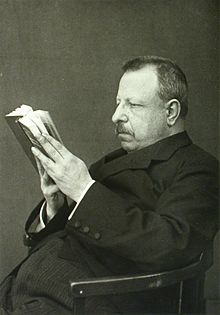
Benedetto Croce looks like the most
stereotypical early 20th century European
intellectual you've ever seen. Until you look
up photos of Henri Bergson. Oh, fuck.
Croce carried into Italy the mainstream tradition of Germany’s philosophy. His central influences were Immanuel Kant, Georg Hegel, and Friedrich Schelling. His politics followed Kant’s, his thinking on society, culture, and psychology followed Hegel, and his ontology followed (at least one of the several) Schelling.

He was the leading liberal intellectual of the newly-united Italy until his death in the mid-1950s. He'd been a resister of fascism since its early days arresting (like Gramsci) and assassinating left-wing opponents. The murder of socialist MP Giacomo Matteotti in 1924 was Croce’s turning point against Mussolini.

This historical info is all just one level of sourcing away from Wikipedia. I started with Britannica, actually. I’m not all that familiar with Croce’s philosophy – I found Nietzsche much more productive for the directions that I wanted to pursue in my own research. And when I was a student, the courses I took on that tradition concentrated on Kant and Hegel themselves.

Gramsci’s essays in prison engaged with Croce’s philosophy as a political theorist. Croce articulated a tradition of thought that saw the state at the centre of politics, of society, of human existence itself as an ontological principle. In this, he was following a conservative perspective on the ideas in Hegel’s Philosophy of Right.

In Croce’s philosophy, the state – metaphysically speaking – pre-exists humanity itself. The state is an ontological principle universally necessary to harmonious and unified human life. A given society and culture is the expression of the state.

This is a bit much for Gramsci, as it is for us. But I am not surprised that totalitarian politics and philosophy grew in the Western tradition where those right-wing Hegelian ideas were so influential.

Gramsci was concerned to critique this idea that culture was an expression of the state. That presumption that a change in the nature of the state would change the culture was part of what led his own movement, philosophically speaking, to its failure.

So what would this more complex relationship of society, culture, and state be?

Tainted Left III: Good as a Crystal Ball, Research Time, 21/07/2016

Continued from last post . . . When I was reading Antonio Gramsci’s Prison Notebooks a couple of years ago, I noticed a frequent target of his criticism. It was the idea that history’s development was inevitable. 

A little more detail. History developed according to a logical order: the creation and reconciliation of contradictions. This is the Hegelian vision of history, the necessary development of progress. The marxist reading was that history inevitably progressed to the terminal crisis of capitalism and the emergence of communist institutions and society.

From a march of Italy's many different communist parties,
in solidarity with Greece's Syriza and other resisters to
the European Central Bank's austerity regimes.
Notice, I said ‘marxist,’ without capitalizing, or referring explicitly to Karl Marx. That’s because, as Gramsci repeated and Louis Althusser demonstrated through some intense analysis, Marx himself didn’t think this way about history at all.

Gramsci found many of his fellow Communist Party activists in Italy frustrating because they had essentially become quietists. Not because they had given up on building a new order in society, but because they believed that it would come about through the superstructures of capitalist human society. And not through any direct doings of their own.

Now, it’s not as though any subversive activity at all would do. Fyodor Dostoyevsky could teach us the futility of subversion done in the wrong way, in the wrong place, in the wrong time, or just plain stupidly. That was the story of both his own life and his classic novel Demons

His own anti-Czarist campaigning was at the wrong time. Stepan’s intellectual democracy activism was in the wrong place, under the condescending dotage of the Russian aristocracy. His son Pyotr’s violent revolutionary terrorism was the wrong way, needlessly killing people and burning down neighbourhoods because he believed it would provoke mass unrest. 

And they were all stupid about it, Dostoyevsky implies. I mean, they got so much wrong. 

Where does this historical necessity come from? It’s a false necessity, of course, but it’s still a concept, and so we can ask about its mechanics. There’s no ontological necessity involved in this vision of reality – no clockwork parts here. 

Instead, the ontology of a necessary path for history’s development flows from a philosophical principle – the principle of history’s narrative on the Hegelian account.* Basically, it’s the notion that history has a single dominant narrative at all. That there’s a story of human history and society that is literally THE story.

From the 2014 television adaptation of Dostoyevsky's
Demons, directed by Vladimir Khotinenko.
* At least the bog-standard Hegelian account that most of the Communist Party activists in whose circles Gramsci and Althusser moved believed. It's not Hegel’s own thinking, which is much more complex than a lot of its most enthusiastic inheritors conceived. It’s the Hegelian idea of history’s logic reduced to dogma.

I’m not even sure I should have separated that last footnote, because its central idea works just as well in the main text of this post. When a complicated philosophical concept or idea gets turned into a dogma, it’s reduced to platitudes, too-simple matters of faith, the emptiness of common-sense truths. 

A dogma no longer provokes thought, but simply has to be believed. And that’s kind of what happened to Karl Marx’s very complex engagement with Hegel’s and the Hegelian concept of history’s logic. 

When a complex philosophical concept is barmy and ultimately unworkable – like Hegel’s concept of history’s logic – becomes a dogma, we end up with a movement of people making themselves into idiots. As in the quietist revolutionaries of Gramsci's Italian Communist Party.

In super-short form, the concept of history’s logic runs like this. Hegel developed a structure of logic – simple concepts (like Being and Nothing) contradict each other, but you can resolve that contradiction to create a more advanced concept. This process keeps going until you reach a single concept that includes the entire range of human knowledge and potential, the absolute.

Hegel’s Logic mapped this progression. He wrote it concurrently with The Phenomenology of Spirit, which mapped this progression of concepts onto human history and psychology. He found embodiments of these ideas and movements all over human existence. Of course he did – he was looking for them.

Hegel mapped his Logic onto human existence through abstraction. He reduced a complex and complicated human self-consciousness of a given event, society, or era to the pure abstract of a philosophical diagram. It understood reality along very clean lines, but that understanding no longer had anything to do with real life.

So how are you going to act in the world if your thinking is no longer connected with the messy complexity of real life? Let alone change the world? . . . To be continued

One and All Flow Together IV: The People as State, Research Time, 04/01/2016

Continued from last post . . . I meant to get to this idea yesterday, but my preamble ended up taking damn near the whole post. But here's Negri's basic argument against the core of Hegel’s philosophy and the essence of modernity it expresses.

The core concept of modernity, as far as the purpose of Empire goes, is mediation. As I wrote this weekend. Politically speaking, for our rights to exist, they need a mediating body to recognize those rights, administer them, and protect them.

In recent years, I think Canada has made great progress in
building a conception of the national identity that
genuinely embraces difference. Modern Canada, as a
state and a culture, seems to have (for the most part)
successfully broken ethnicity, nationality, and
cultural continuity from the legitimacy of your
citizenship. All you need to do is accept a particular
democratic morality and political approach.
In other words, we can only be complete individuals acting in the full freedom of our fundamental rights as citizens of a state that recognizes, notarizes, and administers those rights. Our individual freedom requires that we subsume our individuality to the bureaucracy of the state. 

Only in leaving your individuality behind can you be free. 

Now here’s Negri. He interprets the political meaning of Hegel’s entire system of metaphysics. The state of living in absolute knowledge resolves the human sense of alienation from perfection. 

Hegel builds a complex structure of relations among concepts. Reasoning properly leads you from being dumbfounded at the contradictions of the world, to understanding how all of these contradictions perfectly reconcile in the fullness of reason. 

The path to absolute knowledge and its structure has the firm necessity of a logical proof. Because it is one. That's Hegel’s Logic, working through the fundamental structure of universal reason as a logical proof.

And what does this total reconciliation look like in a political context? It's such a deep submission to authority that you subsume your own will into the actions of the nation, the collective ethnic-cultural-linguistic entity of which you've always been a member. 

You just weren't yet rational enough to realize that you were more than a disconnected, alienated individual. 

But this submission of will and subsumption of being is only possible once the nation follows the necessity of reason’s structure to achieve its own absolute knowledge. It's become the administrative engine through which our individual rights can be realized, notarized, and guaranteed.

The state. The nation achieves the culmination of its essence as the state. The individual achieves the culmination of its essence as a citizen. 

You’re subsumed into the collective, but retain your individual rights. They’re guaranteed in all the forms that legitimate your existence as a citizen, whether they’re a birth certificate or a citizenship oath.

Donald Trump at a rally in Mobile, Alabama. Trump's
politics embody most openly the ethnic nationalism of
the United States of America, the vision of that nation
as the culmination and sole legitimate state of a
white European cultural history and people.
Liberation is finished with the citizen in the liberal state that guarantees individual rights.

Sounds fine in the abstract, but look what the state is composed from in the Hegelian picture. It’s the culmination of the logic of nationhood. And all that nationhood implies: historical continuity, cultural continuity, territorial continuity. 

A territory is for one nation alone, throughout its history. Otherwise, you break continuity and you prevent the nation from realizing its highest form (and humanity's highest form) as national unities subsumed into the nation-state.

This is not the foundation of freedom, but of nationalist violence, ethnic cleansing, and genocide. If you refuse to accept difference into your community, then variation will always be your enemy. This is true in all contexts of human thought and action.

Value unity and conformity over rebellion and difference, and you’ll never have a new idea in your life. You'll stop innovating, stop growing, stagnate into a pool of racist, discoloured, screaming, acid-melted flesh of human toxicity.

Progress comes from rebellion against the rules, restlessness in the face of “how things have always been.” Freaks, visionaries, and immigrants are the fuel of progress and its engine too. 

Freedom is never perfectly realized. The demand for freedom isn’t striving for a perfected state of humanity. Believing that you're perfect is the worst thing anyone can do, because you’ll never change yourself anymore.

Freedom the demand for freedom. It's the struggle against the weight of how things are.

One and All Flow Together III: Ridiculous Unity, Research Time, 03/01/2016

Continued from last post . . . A person’s fundamental human rights don’t rest on the decision of a state to grant them. All you need is to demand a right, and if that right helps secure your freedom without jeopardizing or harming your community, then you can legitimately claim it.

Our governments should be a tool for the public and all the communities that constitute a wider public to put some teeth behind securing and protecting those rights. But the history of how the state actually developed made government a tool to administer, police, and control its population. 

The modern state arose from the conservative, reactionary movement that grew up in the face of the revolutions against the absolute monarchies. Philosophies that justify the power of the state over the people were developed as the intellectual wing of this reactionary movement. 

From North Korea's Arirang Mass Games, the
coordinated movements of hundreds of people as one
entity that subsumes all their movements into an
organic whole. I wonder if there's any symbolic
meaning here?
That's true for blatantly authoritarian philosophies like Thomas Hobbes’ theory of sovereignty. But it's also true for more subtle philosophies, like Jean-Jacques Rousseau’s theory of the general will. 

In that example, democratic representative institutions like parliaments aggregate and process individual wills to produce the will for what is best for the nation as a whole, at least ideally. 

But the general will doesn’t actually exist any more than the nation actually is some kind of superorganism that all our individual wills jack into like some cybernetic hive mind.* This is true of the nation. Nations aren’t real. They presume uniformity in culture, territory, morals, and history where there's always ever been difference, variety, multiplicity.

* Images from sci-fi are incredibly useful in all kinds of philosophical thinking. Philosophers should be in so much debt to that genre.

Nations. They’re a ridiculous concept. 

But we all believe in them. It’s the work of hundreds of years** of administration, services, symbols, military mobilizations, anthems, history and culture curriculums, media productions, and all the other ways I can't immediately think of right now that a national identity perpetuates itself.

** If not thousands of years if you consider how the Chinese national identity arose from that old empire, a state government and bureaucracy which has been continuous in some form for literally millennia.

Nationhood arises from the unity of government over a long enough time. National unity is imposed on a population with far more differences among each other than there is superficial commonality.

A patriotic symbol that functions to unify a nation.
The unity and uniformity of a population isn't natural. We're all individuals. When we interact, we’re just going to become more different. We should be proud of that creativity, our ability to produce new ways of being.

But so often, we aren’t. We’re told to conform. And so many of the great philosophers, especially in the modern period, have been more concerned with justifying the pressure to conform than encouraging our rebellion, creativity, contrariness, and variety.

Antonio Negri has a very quick argument against Georg Hegel in this regard. I'd like to talk with some of my friends who are still devoted to the study of Hegel about this. Because it's a quick argument. 

So the natural response of a sadly typical Hegel scholar will be to dismiss it, because Negri doesn't reckon with all the details of the Hegelian system and all its possible interpretations. Just the general thrust of the system.

Frankly, why should he play by the rules of traditional, conservative scholars? Traditional, conservative scholarship would never have resulted in a book as remarkable as Empire

This is the problem of the academy. It can give you an institutional home from which you can practice your research in peace. But it slows you down, makes you afraid to take anything but the most careful steps. 

So throw caution to the winds! What is the argument? To be continued . . . 

Where a Thinker's Real Power Lies, Research Time, 16/10/2015

Since writing yesterday's post, I started thinking about another problem of Fukuyama's writing. I mentioned it in passing yesterday. It shows the disconnect between the networks and culture of university-based research, and the networks that enable direct political influence.

Iraq has been at war for a dozen years now, and it seems
the violence won't stop for a long time. Francis
Fukuyama's writings play a role in this. More power in
the real world than university-based philosophers dream
of in their worst nightmares.
By the standards of disciplinary academic philosophy, The End of History is an awful book. His political philosophy’s central idea is that capitalist liberal democracy is the only framework for society that perfectly recognizes universal human dignity. He bases this idea on how he understands Georg Hegel's political and historical thinking.

But he has a pretty shitty understanding of Hegel. It's too simple. He takes Hegel's idea to be equivocally clear. And when you read the books, it just isn't. 

Hegel's work spawned so much controversy because everyone who read his work knew it was a profound new way to understand humanity. It was revolutionary for its time.

The controversy was over what it implied. Fukuyama glosses over this pretty quickly. The generation after Hegel's death saw academic scholars take his ideas in conservative directions, and political agitators take them as inspirations for revolution.

Fukuyama takes the fall of the Soviet Union and growing freedom in Chinese markets as empirical proof that the revolutionaries were wrong. Update the principles to what a mainstream Western conservative would say in 1992, and Fukuyama's a Right Hegelian

But after 200 years (and enough additional creativity that even summaries of the tradition are enormous), there were too many different arguments and detail to paper over their significance. 

No matter how remarkable the fall of the Soviet Union was (and no matter what its leaders wanted you to believe), there's more than one way to be influenced by Marx. That's what Spectres of Marx is all about. 

Think workers should be able to organize a union? You
know, Marx was part of an international union movement.
Hell, ideas we share with Marx are so ubiquitous today, they're mainstream whether you admit it or not. Do you think income inequality is dangerous to society? Should inheritance taxes be higher for large estates? Is it sensible for the state to own public utilities? All these ideas have roots in Marx. Or at least, he's among their ancestors.

Fukuyama looked at all the controversial and divergent ways to think about Hegel’s philosophy, and said with a shrug* that they were all wrong. The one correct view of the meaning of Hegel's thought is Alexandre Kojève’s.

* The End of History has such a casual tone at times, I can feel it shrugging. I’d like to write a book that can shrug, but that remains much trippier and stimulating than Fukuyama’s relaxed certainty.

Specifically Fukuyama’s interpretation of Kojève on Hegel, since even this is the subject of a lot of scholarship and argument. The priority of academic disciplines is to make your point, but engage seriously with as many (or at least the most remarkable) contenders as you can. 

Fukuyama never did any of this, and most academics dismissed The End of History as trivial and unremarkable. So why did its ideas form the heart of foreign policy thinking of the Bush-Cheney presidency?

Francis Fukuyama being more powerful in changing the
real world
than every radical Marxist scholar in
every humanities faculty in every university in North
America.
The End of History was popular among a group of people who cared nothing for the opinions of university academics. He worked in the State Department under the Reagan presidency. 

There, he made friends with many Reagan and Bush Sr officials who'd later serve in higher positions with W. He was a key figure at the Project for a New American Century think tank, and worked at the RAND Corporation since the late 1970s. 

Fukuyama didn't need the approval of a university sector network. He made his career in networks that have real influence: think tanks and the government. 

That’s why it’s important to understand Fukuyama's ideas. Not because of their influence on academic philosophers; there isn't any. It’s because his ideas are key conditions for invasions, wars, and the suffering and deaths of millions.

Get Real II: Real Progress Comes From Movement & Agitation, Research Time, 15/10/2015

Continued from last post . . . There's a unique conservative world-view that’s coalesced as its mainstream since the Thatcher and Reagan eras. Its attitude is a tense, dynamic mixture of brutality, the cruelty of indifference, and naïveté. 

Because jail isn't just about free meals, a decent gym,
and good-quality dope. It's also about poverty and the
daily indignities of the social causes of incarceration.
Of the Big Four thinkers of modern conservatism, Francis Fukuyama is the most openly naïve. His The End of History will probably become (if it hasn't already) the first of new conservatism’s landmark works to be buried. The first one to start digging the grave was Jacques Derrida at the conference whose keynote became Spectres of Marx.

He starts with a point that a lot of academics see. For someone who depends so much on Hegel for how he understands history, Fukuyama has a ridiculously oversimplified version of Hegel. He sees certainty where the text is enigmatic. Clear pronouncements where Hegel himself was extremely ambiguous.

Those philosophical enigmas are why Hegel became a legend in the tradition. The ideas are clearly significant, but there are so many ways to understand him.

But Fukuyama's missteps (mis-thoughts?) are much more profound than this. His whole point is a terribly naïve conclusion that we’ve achieved the perfect form for human society. And it's the capitalist liberal democratic state. 

Why is it perfect? Because human nature is essentially to seek status and dignity among people. Capitalist liberal democracy ends conflict over social status by enshrining each of us as having the highest, equal dignity before the law in our civil rights.

These words feel like nonsense to me. I may as well have written “Staple booger quack-quack cauterizes flagellum footstool Doctor Tulip O’Snap.” 

Because when Jacky from Algeria starts shit with you,
you better look out.
Fukuyama completely ignores that the dignity of equal standing in civil rights isn't enough to preserve you against the material indignity of extreme poverty. It isn't even enough to secure you the material defence of your civil rights if you can't afford to hire a competent lawyer to defend you from a crown prosecutor.

Derrida says it himself, that people's material indignities are intolerable. They're only worse now than two decades ago.
“Never have violence, inequality, exclusion, famine, and thus economic oppression affected as many human beings in the history of Earth and humanity.”
Yet there’s an even deeper, more profound oversight here. One that shows what a clear eye Derrida had, despite his (sometimes deserved) reputation for obscurity in his writing.

It's an obvious fact today. So obvious that it's hard to think of this as having been news in 1992. But it was. 

Fukuyama's most naïve, blind mistake was to take for granted that the whole of people's political lives was their relationship to their state and its laws. This way of thinking doesn’t understand that the political actions that most speak to people's hearts lie beyond the relationship of an individual with her institutions.

There's a giant social field whose movements stretch beyond the boundaries of states. Even international institutions can get at best a limited grasp on this field. It’s the whole of humanity.

Most protest movements are, in some very important dimensions, about the relationship of people to their state, laws, government, and institutions. But the need for such a movement has other roots. Take an example. 

Black Lives Matter has a comprehensive political program to change the policies, rules, techniques, and daily habits of police officers so they genuinely serve citizens and protect their civil rights.

But talk of civil rights and institutions doesn’t capture everything that happens in a social movement. It doesn’t capture their actual drive – the reasons, causes, and motives that lie deep within each activist’s character and soul, which all move them to take part. 

The politics of the state and its institutions isn't enough to meet all the challenges of human ethics.

Another one of Fukuyama's major concepts is the essential role the human drive for recognition – for status, for dignity – has in our nature. But running your state institutions on the ideal of equal civil rights isn’t enough to secure human dignity against all possible violations.

Unseen Theology II: The Ghost of an Image, Research Time, 07/10/2015

Continued from last post . . . So what does this mean? That the animating spirit of W-era neoconservatism was Christian supremacy in disguise?

It's a pretty heavy and simple statement to say about a writer whose ideas and works are as complex as Georg Hegel's. But because Fukuyama takes up an oversimplified version of his ideas, I suppose that can be my playing field.

You could say that this is the most powerful face in the
Arab world: Saudi Prince Muhammad bin Nayef, who's
become the de-factor ruler of Saudi Arabia, thanks to
the dementia and possible Alzheimer's of King Salman.
Fukuyama pitches his idea – history bends toward capitalist liberal democracy – as having universal scope. He gives a brief dismissal of Muslim cultures from being part of this trajectory. Oil wealth, he says, perverts the natural character of their societies so much that the supposedly universal yearning for democracy and freedom fades away.

Fukuyama dismisses the Muslim world too quickly. Quickly enough that probing why can reveal a very deep problem with his program.

His philosophical roots in Hegel inadvertently – and invisibly, even to Fukuyama himself – cut not only the Muslim world, but the entire non-Western or non-Christian world out of consideration. 

When I read Philosophy of History, I found an important limitation of the book was that the progress of human history culminated in Europe, in the West. Typical for the early 19th century in Europe. But that story of humanity can't work in an era after colonialism, when we can't really hide anymore from what European colonialism really was.

Any philosophical conception of humanity's history has to account for our plurality, our diversity. Go ahead and think messianically about the history and development of human civilization. The notion that human freedom will have a single, unified form is a deservedly tough sell these days.

You know what’s an even tougher sell? That the single, unified form of human freedom is fundamentally Christian. In the peculiarly Christian idea of the Kingdom of Heaven, Hegel saw the culmination of human politics. It’s the restoration of paradise, where everyone is equal in status and lives in harmony.

When I worked full-time in academia, I rarely found
authors or colleagues who took Fukuyama seriously
as a political philosopher. We really should, if only
because of how effective his ideas were.
European humanity becomes God by building a system of civil government where everyone in society perfectly and mutually recognizes each other’s equal dignity and rights. 

When I think about how Derrida described Hegel, I see parallels to my discussions over this Winter with Steve Fuller about his book Knowledge

There, we talked about how a very peculiar theological conception of humanity as being "in the image of God” sparked a revolution in our knowledge institutions. We started learning about the world because that knowledge brought us in tune with God, more like God. For Christians, humanity and God share a common nature.

God and Christianity doesn't figure in Fukuyama’s messianic vision of a planet full of capitalist liberal democratic regimes. Globally omnipresent democracy would be the paradise in which everyone recognized each other's inherent dignity and inalienable rights. 

These dignity and rights are grounded in human nature alone. Nothing about the image of God here. Fukuyama has, to his credit, learned the post-colonial lesson: We shouldn’t fit all peoples into a world-view that’s the product of only one culture.

But his break isn’t clean enough. Fukuyama still relies on Hegel for the framework of his political thinking. And Hegel's philosophy is so firmly rooted in Christian culture that, long after the ideology of Man as the Image of God faded from Europe’s scientific culture, he’s still riffing on it. 

You could also say that this dead fruit salesman is
the most powerful face in the Arab world. It's
a case I could certainly feel safe making.
Fukuyama’s entire conception of this universal yearning of humanity as human bends all the peoples of the world to a Western cultural narrative. His supposed liberation in Western democracy is an imperialist ideology in its heart.

This is Jacques Derrida's basic criticism of The End of History in chapter two of Spectres of Marx.

And you think it’s over. You think Derrida, the established philosophical genius so famous as to have an adjective made of his name, would have schooled this right-wing upstart. Fukuyama's just a booster for capitalism, after all.

Then came Bouazizi and the revolution.