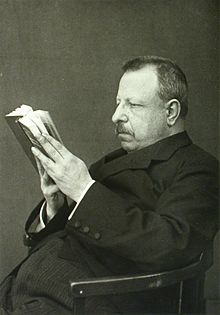
Showing posts with label Perry Anderson. Show all posts

Contradictory Heritage, A History Boy, 08/09/2017

I have a pretty stand-offish relationship with Theodor Adorno. I think it’s a result of my first exposure to him. That came through an older university librarian I knew by the philosophy department circles back in my undergrad years at Memorial.

He was the philosophy specialist in the library’s procurement, and his own PhD research focussed on Adorno. CD was a smart guy, and although I found him a little pretentious, he was a good person to hang out with. I have to say, though, he wasn’t very good at selling Adorno to me.

I reconsidered his work as I got older, but never really made the jump to studying his philosophy in full. Mostly, it was because I was working on a totally different tradition and approach in Western philosophy during my doctorate – informing environmentalist ethics through philosophy of biology and ecology, with a leg up from Gilles Deleuze and Félix Guattari on the conceptual framework.

Remember, freshmen, there is no art without suffering.
No education without folly.
No philosophy class without a surly smart-ass.
But I think it was also because of his reputation. I’m not usually one to cower in front of a reputation, but with Adorno, I did. His work wasn’t just philosophy to me – it was an edifice. I came to that image through the Adorno specialists and students I knew – they treated him like a figure of awe.

Nein broke that image for me. He injected some levity into Adorno for me, and made him and his work more approachable. I don’t want to read some unapproachable edifice. I want to read a thinker.

So I’ll probably hit up some Adorno soon. I’ll soon be transitioning away from looking at left-wing philosophy as it’s more traditionally defined. But after a walk along the path that I’m heading for, I think I’ll go back to some Adorno, no matter how strange his work might be.

How strange might that work be? Well, here’s Perry Anderson’s take on it. This is probably what I admire most about Anderson’s writing and thought. He’s a historian of ideas who can genuinely grapple with the real strangeness of some ideas and still find witty and concise ways of explaining it.

Maybe it helped that I was already familiar with the context. I mean, I haven’t read much Adorno myself, but I’ve read almost everything else that influenced him. So it’s not like I have no idea what kind of concepts are flying around there.

Here are the concepts that Anderson throws down to explain the underlying ontology of Adorno’s philosophical writing. Same goes for the rest of the Frankfurt School more generally.

He describes Frankfurt School thinking as on the same plane as these following two philosophical frameworks. One is the philosophy of Friedrich Schelling. Anderson describes this as adapting the metaphysics of Christian salvation to the human relationship with the material Earth. So the path to humanity’s redemption from our fundamental corruption is a kind of devotion to harmonious material nature.

Schelling is another German philosopher who I
could just never get into. Everything I heard about
his ideas, even from people who loved his work,
made me think I would hate it all. I haven't heard
anything much different yet.
The City of God becomes the City of Man when it’s no longer a city, but a forest. And we must treat it as such.

Two is Heidegger’s critique of technology, his account of the technological attitude as the rupture of man from nature. This rupture is the ongoing social, cultural, and philosophical goal of dominating the Earth – we dominate Earth to make commodities from it, and we define our lives through our commodities, our stuff.

In the words of the Frankfurt School’s marxist heritage, capitalism is the rupture of humanity from Earth, from nature. So a liberated society, in Adorno’s thinking* is a reconciliation of humanity and Earth.

* According to Perry Anderson.

It’s a beautiful vision. As someone who holds environmentalist political and ethics values, I definitely like it. Despite the way Anderson’s account tends to reify nature. Actually, that’s a serious problem for me. By pulling Schelling’s Christian salvation narrative into an immanent material relationship – humanity and Earth – you turn the planet into God.

Earth isn’t God. It’s Earth. If you believe it’s God, you’re making a serious mistake. God as a Christian concept was designed as the ultimate Other – the Fall means that humanity’s nature is utterly and totally anathema to the Divine. That we’re virtually like poison to divinity.

If this is really the underlying metaphysics of the Frankfurt School, I can’t even say they’re radical left anymore. To make a Christian God of Nature is making an idol out of a word that shouldn’t even be capitalized.

There’s an even deeper conservatism underneath the ideas of what the radical right today call the communist conspiracy of the modern era.

Can a Marxist Tell the Difference Between Theory and Thought? Research Time, 06/09/2017

That was a nice break, even if I did get rained out of our campsite and had to travel home from Algonquin Park on a Highway 60 that was more river than pavement.

I want to get back to this problem of history and philosophy blending together. The example, drawn from some old history books of Perry Anderson, is the marxist tradition of political thinking as the theorists grew separate from the activists.

Max Horkheimer and Theodor Adorno were both terrible activists
at the time of their greatest influence during their lives. Their works
were ambitious and known for being terribly difficult, but their
connection to the political movements of the period was, overall,
pretty tenuous, if it existed at all.
But I look at them during this time, and I instinctively imagine
each of them thinking, "Man, I'm too old for this shit!"
The direct cause was the brutal censoring of original thought in Western Europe’s communist parties on directions from Stalin’s Soviet government, and which lasted until pretty much the fall of the Soviet Union. The theorists’ refuge in the United States found them isolated from political activism of the same kind in the university system.

This is, I think, a flaw in Anderson’s analysis. He’s wedded – at least in this early book – to Lenin’s model of theorist / party leader. So he doesn’t really consider the personal connections of people like Max Horkheimer and Angela Davis, or the involvement of Jewish refugee professors at black colleges in the Civil Rights Movement.

It worries me that Anderson seems to downplay the importance of race as a vector in oppression or progressive politics.

But a key advantage of radical left theorists being shunted away from direct activism and into the university system is that they became, more completely, philosophers. Let me explain how with a few one-time-only definitions-for-the-sake-of-explanations.

In the marxist tradition, a theorist is a thinker-activist according to the models of Karl Marx himself, Friedrich Engels, and Vladimir Lenin. You’re on the front lines of the political movement, organizing different party members, support from trade unions and other civil society groups. But in your off-hours, you’re writing political theory.

Notice that I didn’t say philosophy. That’s because, for the sake of making this distinction, I’m using the two words to mean different things.* A theorist, in this example, is someone whose work is specifically about updating the marxist theory of history as dialectical materialism to the modern conditions of your society.

I get the distinct feeling that Perry Anderson was too invested
intellectually in the British and European politics and experience
of the labour movement to understand the politics of racism,
particularly the complex American version so steeped in both
extremism and denial that there's even a problem. So while I
find his historical insights intriguing in their abstract form, this
empirical blindness seriously concerns me.
* Even in my everyday writing, outside of this illustration, I don’t really use ‘theorist’ in the same sense of ‘philosopher’ that most folks do. I mostly alternate ‘philosopher’ and ‘thinker.’ I consider that a more accurate pairing.

In contrast to a lot of message board marxists today, the early 20th century’s most important theorists didn’t consider an ideological / economic analysis of mid-19th century western Europe to apply equally well to our multi-centred globalization and high-speed communication networks. That would just be silly.

Just as Marx himself built dialectical materialism and applied it to understanding the European economy and society of his own time, early-20th century marxist theorists applied the same conceptual tools to their own time. Conservative Hegelian metaphysics blends with qualitative economic and social research to confront the political mainstream with a radical socialist alternative.

In the 1960s, thinkers like Louis Althusser and Theodor Adorno blew this tradition apart by introducing concepts from non-marxist philosophical traditions into marxist theory. Althusser brought Spinozist ideas to the tradition, while Adorno blended marxism with existentialism and the more complex cultural criticisms of Walter Benjamin.

I’m not sure whether I should credit either Adorno as a forerunner of the radical democratic tradition that Utopias will develop. Althusser certainly is, since he was the first thinker to see the continuity of the concepts of Marx, Machiavelli, and Spinoza.

Adorno, I’m still not sure. I may look into more of his works later on. There are still parts of this bed of concepts that I want to fill in from my sure bets. More on that coming soon. Or eventually.

History as Back Catalogue I: You Gotta Know More Than Just the Hits, Research Time, 31/08/2017

Those were some interesting (and long) riffs on different ideas I encountered reading Perry Anderson’s book Considerations on Western Marxism. I’m not sure how successful those riffs were, but I think I’ve refined a few more of my own thoughts about the last century or so of history on the radical left.*

* Complicated though that history is. Holy crap, it’s bloody complicated.

A young marx sees the modern age.
August Diehl in costume as Karl Marx filming The Young Karl Marx.
A really important part of Anderson’s thinking here is his analysis of Louis Althusser’s ideas and their significance. I wrote quite a bit about Althusser’s thinking when I was reading his collection For Marx in Summer 2016.

Anderson writes about the impact that the discovery of Karl Marx’s early works had on the marxist tradition. Before the Soviet government published editions of the Economic and Philosophical Manuscripts and other of Marx’s manuscripts from the 1840s and 50s, folks in the commie community only had Capital and some journalism.

Nice enough to become the intellectual foundation of a political movement which would affect the development of Earth’s entire human civilization. It would be as if for decades, no one had ever heard any of Curtis Mayfield’s work with The Impressions.

Yes, Superfly! is amazing, but you understand it so much better when you hear “Keep on Pushin,” knowing that they were part of the same ongoing process of creativity.**

** I don’t think anyone has ever made an analogy between Karl Marx and Curtis Mayfield, though I stand to be corrected. I doubt anyone ever will again. No guarantee I won’t.

So a generation of marxist theorists had their minds blown by the publication of this enormous back catalogue that was so different from all the Marx they’d known before. Naturally, they built that mainstream scholarly picture of Karl Marx as having a radical break in the middle of his life.

The analogy might have been a reach, I admit. Okay, it was kind of
ridiculous. But here's something that's never ridiculous – You should
listen to some Curtis Mayfield. It's good for you.
Althusser’s analyses put the more philosophical aspects of Marx’s thinking at the forefront. He understood the earlier, more explicitly philosophical work as the same project as Capital, but in a different context.

Here’s how Anderson puts it. In both works, he was trying to discover what kind of knowledge and self-image could awaken working people to refuse the wretchedness of their lives.

Capital was a very empirical survey – one of the historical genesis projects of the science of sociology – of the material conditions of the urban working class. Marx investigated their legal rights, working conditions, systematic advantages and disadvantages. Most philosophically, he examined the different ways that working class people could understand themselves – which self-conceptions cowed them and which empowered them.

The early stuff like the Economic and Philosophical Manuscripts and The German Ideology made explicitly philosophical work on the conditions and nature of Europe’s urban working class.

The 1930s generation of marxist theorists were the first to take those works seriously. They built a new, more complex understanding of Marx and his works. They could see more clearly than ever that Marx's writing contained many more vectors and paths for thinking than the straight-up dogmatic reception of Capital.

They could see the multiplicity, the difference, the true complexity of Marx as a philosopher. Just in time to fall under the axe of a marxist political leadership who had no tolerance for multiplicity and complexity.

To be continued

Hey! Cultural Marxism! II: Missed Connections, Research Time, 25/08/2017

The philosophers went to the universities. The group of thinkers at the centre of Perry Anderson’s short book Considerations on Western Marxism are, more commonly, called the Frankfurt School.

They're at the centre of the great right-wing conspiracy theory of our time – cultural marxism. Part of what I want to do with the next few posts is clarify my ideas about this conspiracy image – the product of Andrew Breitbart’s weird interpretation of this existentialist marxism.

The cultural impact of this angry, angry man fascinates me.
I’ll be getting back to Breitbart’s interpretation later on, riffing from his book Righteous Indignation. I want to stick with Anderson for now, because Anderson describes accurately the history of the Frankfurt School and the other theorists of Western marxism.

So when I left off yesterday, Stalin had just purged the entire Soviet Union of any communist philosopher with any originality of thought beyond dutifully transcribing and explaining ideological directives from the Central Committee. Those people were all dead by the end of the 1930s.

It’s not as though the study or continuation of marxist theory was doing much better in Europe. The central clique of these thinkers in the university sector were at Max Horkheimer’s Institute for Social Research in Frankfurt. Hence the name.

They ran into some trouble when Hitler came to power. So Horkheimer and the rest of his crew picked up whatever they could and moved to New York.

Here was the break in the Cold War’s West* between philosophical creation and community organizing among working class people. The main institution the theorists used to become community activists was the Communist Party of each country where they lived.

* And the Cold War wouldn’t even start for another 15 years.

Anderson wrote his book in the 1970s, so there was no sign on the
horizon of the ironic movement in universities happening today:
Squeezed by large-scale underemployment, many humanities
researchers are pursuing careers outside the university campus,
and many on the left are becoming journalists and activists.
Already, the link between philosophers and activists was getting strained. The philosophers no longer worked for the political parties or the radical newspapers. They taught in universities. But there was still the party itself, where the theorists could work with the folks who pounded the streets and the factory floors.

Uprooting the entire intellectual rank and file of the western European workers’ movement** across the Atlantic Ocean had two effects.

** Or killing them. Many of them were also killed. Taken out of their homes and shot. Bundled into a car in the middle of the night, tortured, and never seen again.

Here was the first effect. I don’t even know why I included that note about so many socialist philosophers and theorists being killed. Because I can just say it here. The rise of Stalin in Russia and Hitler in Europe resulted in many original thinkers getting bullets in their brains. That’s one obvious loss to the community of writers and activists.

The other loss was a bit more subtle. While Horkheimer and the other political refugees from Hitler’s Europe were working in New York, they had no Communist Party to draw on.

Now, there were plenty of communist parties and groups in the United States. But none of them had the unity of the European communist parties. It was a literal unity, another function of the social organizing work Karl Marx and Friedrich Engels did in the 19th century. They built an international conference for all the communist parties of Europe. It strengthened the unity of the European workers’ movement’s social network.

The flaw of the marxist tradition – and all traditions named after a
person – is excessive fealty to Marx himself. It hobbles a thinker
or an activist from adapting to changing times.
None of that existed in the United States. Its movements for workers’ rights developed in very different directions in an extremely different set of cultures from those in Europe. Left-wing politics in the United States was much more fragmentary, with different parties across the states all holding different principles and doing their own things.

That lack of centralization had one big advantage – it made the workers’ movement more flexible. The core ideas could survive many different attempts to repress them, their devotees could adapt to the most hostile and unstable political contexts. Plus, the movement on a national scale was more immune to pressure and co-optation by Stalin.

Not to say that plenty of communist parties throughout the United States didn’t become puppets of Stalinism. Many did. Which is why the ideas and goals of a social democratic liberation movement mutated away from communist parties themselves. But that’s for later.

The problem was that there was no unified political party on a continental scale for Frankfurt School leaders and other left-wing intellectuals to latch onto. So by the end of the Second World War, the university-based philosophers of the workers’ movement lost all their material connections to politics.

This is where the irony sets in . . . . To be continued

Hey! Cultural Marxism! I: Thought Becoming Action, Research Time, 24/08/2017

That much-too-long meditation on political agency was only one intriguing idea that I picked up reading Perry Anderson’s books a while ago. Here are some thoughts on an idea I found in his book Considerations on Western Marxism.

It's a history of ideas, tracing how the marxist tradition of political philosophy developed in the American-aligned bloc during the Cold War. One of the narratives of this book is how theory was cleaved away from real-world activism in the movement.

All this research in the marxist tradition is part of a strain in Utopias
that will examine the role communism plays in rhetoric against
utopian thinking, from the most florid think tank essays to the
dankest memes. I hope I won't have to get too dank.
Okay, you might be thinking, how is that weird? Well, it’s a truism in our society that theoretical thinking doesn’t have anything to do with practical action. I remember when Eric Foreman told his dad that he was thinking of studying philosophy in university, and Red asked if he had plans to work in a philosophy factory.

Say what you will about how well most communist countries worked out.* One really interesting part of that tradition was a deep link of its most profound theorists and researchers with its activism and community organizing.

* Actually, don’t. Because it’s all been said, I’ve heard it, I’ve said it myself, and it doesn’t matter that I fundamentally disagree with a lot of the political and economic principles of a tradition. There is still value here, as in a lot of places. You can read works without devoting yourself to their ideas. It’s called being critical.

Karl Marx himself was a union organizer, first locally in Cologne and Paris, then internationally through the International Workers of the World. Same with Friedrich Engels. It was the same with Vladimir Lenin and Lev Trotsky as well. They all wrote historically significant, philosophically rich books of theory while leading political outreach and activism.

After the First World War, the break happens. Antonio Gramsci is the first philosopher of the marxist tradition to equal the insight, intensity, and influence of Marx himself. But he was a weird spin on the philosopher-activist. Marx, Engels, and Lenin were theorists at the same time as they were activists.

Marx was writing dense and complex theoretical essays and manuscripts while organizing radicals and activists. But Gramsci did all his philosophical work at the end of his active career.** There was a clear break in his own life – the slam of a gavel – of his activism as a political party organizer from his most important and best writing.

Just look at this fucking hipster. Shame what happened to him, though.
** Prison will do that to a guy.

Yet from Lenin’s death onward, theory decisively broke with practice. The main reason was some dirty hipster named Josef Stalin, who took over the Soviet Union with the help of his secret police apparatus. So from about 1924 to 1953, any writer who wrote anything dissenting or even departing slightly from the letter of official government doctrine fairly quickly expired.

In Russia, the intellectual tradition of the radically creative philosopher-activist was stamped into the dirt and buried. Thanks to the international political organizing of communist intellectuals across borders, all countries’ communist parties were networked together.

Over the 1920s, the Russian faction became more powerful and began dictating terms to the other parties – occasionally even making some party members around Europe disappear if they were deemed too Trotskyist. The creativity of the movement disappeared too.

Activists now just parroted standardized doctrine, approved by the Central Committee of the COMINTERN. First because they knew what was good for them. Later because they knew nothing else. Later still, because they knew nothing.

The irony is that Marx himself set up that structure and the incentive for communist philosophers to rely on it. He did it to make sure that community organizing against monarchist rule and for the rights of workers to see more profit from their own labour would always include a philosophically creative side.

The point of including philosophers in your activism organizations is to prevent your activists from letting their thoughts fall into empty dogma. A social movement is only powerful when people understand and embrace those ideas.

But the networks through which those ideas can spread can just as easily expose and silent the creators of new ideas.

Next post: Where did the philosophers go?

Kill Your Idols VII: States Can Be Idols Too, Research Time, 16/08/2017

When I wrote Monday’s post, I was still planning to follow it up with what I’m writing tonight. But I was going to start a new little series. Then I realized that I was still circling around the same problem. I’m jumping into it from different angles. Some work better than others for getting to the point.

That point is pretty simple. It's what I had in mind when I started. Political thinking tends to make an idol of the state, which is dangerous, destructive, and incomplete. What are some ways this idol-casting happens? How can we play Moses to this process and smash that idol before people get too attached to it?

Parliament Hill, one of the institutions that one brand of too-patriotic
Canadians worship. I'm glad we live in a democracy, but we shouldn't
make idols of our institutions and gods of our governments. That
worshipful attitude erodes democracy with scowling, preening
desires to supplicate and submit.
I mean, people are already attached to this idea. It’s the obsessive centre of almost every problem and concept in two separate millennia-old traditions of political philosophy – Western and Chinese. Imagine what would have happened to Jewish culture if God had kept Moses on Sinai for 3000 years.

It would have been a lot harder to break that idol worship than just knocking over a cow statue and yelling.

Antonio Gramsci’s work expresses a powerful tension of this attempt to break up those idols. He was part of a revolutionary political movement that tried to overthrow the Italian state in the turmoil after the First World War.

In prison, he examined how aspects of society that weren’t agents or products of direct state action played a role in their defeat. His major concern was to understand these forces so his successors could take some kind of action on them. Social and cultural aspects of society were the blind spots in marxist thinking until Gramsci realized that his revolution failed because of them.

But it was difficult to grow political philosophy beyond its myopic focus on the state. Here’s an example in Perry Anderson’s essay. One of Gramsci’s focusses in the Prison Notebooks was to examine the ideas of Italy’s leading philosopher, Benedetto Croce.

Benedetto Croce looks like the most
stereotypical early 20th century European
intellectual you've ever seen. Until you look
up photos of Henri Bergson. Oh, fuck.
Croce carried into Italy the mainstream tradition of Germany’s philosophy. His central influences were Immanuel Kant, Georg Hegel, and Friedrich Schelling. His politics followed Kant’s, his thinking on society, culture, and psychology followed Hegel, and his ontology followed (at least one of the several) Schelling.

He was the leading liberal intellectual of the newly-united Italy until his death in the mid-1950s. He'd been a resister of fascism since its early days arresting (like Gramsci) and assassinating left-wing opponents. The murder of socialist MP Giacomo Matteotti in 1924 was Croce’s turning point against Mussolini.

This historical info is all just one level of sourcing away from Wikipedia. I started with Britannica, actually. I’m not all that familiar with Croce’s philosophy – I found Nietzsche much more productive for the directions that I wanted to pursue in my own research. And when I was a student, the courses I took on that tradition concentrated on Kant and Hegel themselves.

Gramsci’s essays in prison engaged with Croce’s philosophy as a political theorist. Croce articulated a tradition of thought that saw the state at the centre of politics, of society, of human existence itself as an ontological principle. In this, he was following a conservative perspective on the ideas in Hegel’s Philosophy of Right.

In Croce’s philosophy, the state – metaphysically speaking – pre-exists humanity itself. The state is an ontological principle universally necessary to harmonious and unified human life. A given society and culture is the expression of the state.

This is a bit much for Gramsci, as it is for us. But I am not surprised that totalitarian politics and philosophy grew in the Western tradition where those right-wing Hegelian ideas were so influential.

Gramsci was concerned to critique this idea that culture was an expression of the state. That presumption that a change in the nature of the state would change the culture was part of what led his own movement, philosophically speaking, to its failure.

So what would this more complex relationship of society, culture, and state be?

Kill Your Idols VI: Needing to Get It Right, Research Time, 14/08/2017

I find it sadly fitting that I’ve spent the last week talking about the complex connections between state violence and fascist militias, then we get hit with an actual fucking Nazi riot. The fascist revolution of America appears to be here.

See, all these thoughts in my all-over-the-place analysis of patriotism’s psychology all had a central point. I’m drifting around a really curious concept of hegemony that Antonio Gramsci develops.

This weekend makes me wonder if the United States of America has
reached a turning point, whether it's no longer possible for extremist
white nationalists and multicultural pluralist democrats to live in the
same country and live loyally to the same institutions. It could be
either the beginning of the end of the American experiment, or the
threshold of a new era of freedom and justice. Or it could end up
being just one more flare-up in a long and terrifying history of
American racist violence.
There’s been a ton written on Gramsci’s concept of hegemony in the last several decades of academic political philosophy. So I don’t want to get into a discussion over whether it was really Gramsci’s, or whether Anderson’s books got it right. Because I’ve been thinking this while reading some of Perry Anderson’s books on Gramsci and the Western left-wing tradition.

He’s a brilliant historian of ideas. The only thing that frustrates me about his work is that he’s such an accurate historian that I have no clue what his own philosophical ideas are. At least not in that abstract sphere of pure concepts.

I read his book on the politics and philosophies of the Indian nationalist movement against British rule, and he had plenty of his own ideas. But those were about political stances – the Hindu-centric nationalism of the Congress Party caused disasters, ethnic cleansing, and immense suffering among Indian Muslims and Dalits.

Anderson is, as you’d expect, not cool with that. His ideas are in the insight of his moral stances in his writing. But when it comes to philosophical concepts, he’s a very meticulous mapper of others’ territory. He doesn’t build his own worlds.

So his map of Gramsci’s concept of hegemony is very insightful. In his long essay The Antinomies of Antonio Gramsci, Anderson was very faithful to Gramsci’s ideas as they are in the text. He even describes them as paradoxical and contradictory because Gramsci developed a very slippery conception of hegemony.

Sometimes, he spoke of hegemony as if it were about state control and influence of other states through the military. Domestically, sometimes he thought of it as state violence. Sometimes, it was the soft power of the state through cultural institutions. Sometimes, hegemony was ideological. Sometimes, it was just a matter of sanctioned gun violence.

It was rather difficult for me to find a good picture of Perry
Anderson where he didn't look kind of depressed. These days, I can
understand where he's coming from.
If the meaning of a term seems to contradict itself, then it can’t be valid. Fine for a historian, but it’s a rule that makes for terrible philosophy. Oddly enough, Anderson's big history book on the Western Marxist tradition more generally tends to give Gramsci more slack on this hegemony concept. Maybe because his focus is on how the concept changed over time and place.

Look again at all those definitions of hegemony that occur across the Prison Notebooks. What do they have in common? The projection of power as the ability to control and influence. There’s always a hub to that projection, a centre of power.

That power centre is sometimes very blunt, and its projection simple and direct. Think about the Russian Revolution of 1917. It could succeed relatively easily (once it got super-lucky) because there was only one vector of power – from the Czar to the masses through the aristocracy and military elite.

Power centres can also be dispersed. Think about a country and society like the contemporary United States. Institutions and networks of influence all over the country spread a morality of patriotism, love of country and the institutions of the state.

Americans don’t believe in this simply as a matter of following orders – schools, television networks, cultural industries of all sorts spread the moralities of American patriotism, America as an ideology. That ideology itself can come in contradictory forms – racists and pluralists can exist in the same country. They have for centuries.

They’re loyal to the same institutions – American democracy, just as Alexander Hamilton and James Madison described in the Federalist Papers. Even though they believe in radically different moral visions of what those institutions should do.

But it’s always a network of control and influence with a hub, the state institutions themselves. That’s the most philosophically tantalizing take I can find, figure out, or think of for Gramsci’s concept of hegemony. It’s the one that I’ll use in my own work.

Hegemony as the dominant projection of loyalty to a state.

Replicating Glory I: Knowing What Kind of War You’re In, Research Time, 02/08/2017

So, like I said I would on Monday,* on to a few more words about Gramsci. It’s so nice to explore these ideas. It’s not a matter of my political sympathies alone, at least not in terms of making it only personal.

* I meant to post this yesterday, but it was actually a super-tiring day with other stuff that I had to do. By the time I was able to sit down with the blog, I was too tired to think.

Italians really know how to throw a communist party.
There’s a greater insight in a minor perspective than a majority’s. You learn more from a perspective that’s under the boot of power than you do from the ones who wear the boots or cut the leather. The ones who have to be wily are more creative, less predictable.

They twist major language and culture to make a hidden space. Call it a safe space. Or not, because the life of the strange is always a little dangerous. This is one of my personal favourites of Deleuze and Guattari’s concepts – the minor.

I’m twisting it when I use it to talk about Gramsci, but I think – when I sit down and write Utopias – I’ll weave together some of what Deleuze and Guattari wrote about the literary voice of the minor cultural perspective with the position of Gramsci as a political prisoner and maybe even as a Sardinian.

What’s nice about reading Perry Anderson’s books about the history of Western marxism, is that he emphasizes the ideas in Gramsci that were immediately important to the community of communist activists and marxist academics. So the ideas that gained Gramsci his quickest fame were his arguments on strategy for revolution.

There’s a dualism at the heart of this strategy – war of maneuver and war of position. When Antonio Gramsci was a young man building the Italian Communist Party in the aftermath of the First World War, communists all over Europe looked to the Russian revolution of 1917 as a model for victory.

As you know, that didn’t really work out. Gramsci learned the hard way that it wasn’t going to work out. Italy was the first of the major European powers to install a reactionary conservative government after the war. Mussolini’s ideology and propaganda literally invented fascism. The left-wingers never stood a chance.

One of the famous images of Vladimir Lenin during his ultimately
victorious revolution of 1917. Look at the size of that crowd, then
understand that Lenin is trying to make himself heard over that
entire square. There is no microphone. He's just standing on some
rickety stage screaming as loud as he can.
The short version of that story is that Gramsci spent just over a decade of his life in prison, until it ended. Both the prison sentence and his life, in 1937 at the age of 46.

Communist revolutionaries, high on Lenin’s victory in St Petersburg, thought they would replicate that victory in exactly the same way. The Bolsheviks mounted a blitz against their own government when all the state institutions were wracked by the most intense crisis in the history of Russia as an empire.

It almost seems like common sense to me that such remarkable circumstances weren’t going to happen in the rest of Europe. Russia was a very different country than the other major European powers. Russia’s culture and political society was still dominated by the monarchy and the aristocracy that surrounded it. And there was no moment as singularly intense as the height of the First World War.**

** With so many themes from the First World War appearing in my research for Utopias, I feel like one basic idea in my own book will be putting the terror of that war at the forefront of political thinking. Hitler’s war, as horrifying as it was, was a creature of the epoch that the imperialists’ war began.

European powers like Germany, France, Spain, Britain, and Italy all had well-developed, complex class structures. It amounted to a redundancy in the society itself. A resistance to overthrow. So what’s a revolutionary going to do?

To Be Continued . . . 

When There’s One More Thing to Clarify, Composing, 31/07/2017

I wasn’t on the blog much, but I actually had a really productive writing weekend. Since I’ve caught up on my marking at the college, I had some time this weekend to get back to that project for the Reply Collective that I was telling you about a while ago.

The blog is, once again, moving on from considerations of Mt Pelerin
Society philosophy, writing, and communications. But those Mt Pelerin
views are seriously unforgettable. This image came from some dude
who lives near there selling his duplex apartment.
So that draft is finished, and I’ll probably give it a polish later this week before sending it up to the editors in Virginia to go in the publishing queue. It’s not as openly experimental as some of my other articles, but I think that’s for the best.

I’ve had my period of playing around, and this is an essay where I wanted to get serious. It’s called “Beyond Socrates: The Philosopher as Creative Craftsperson,” so the topic has a pretty wide scope.

It rides on a few contemporary examples and responds to a half-recent essay by a fellow SERRC member to further develop my philosophical challenge to the philosophical community – Get your conversations out of musty overpriced journals and get them online and into the streets.

Most important to encouraging that profound worldly engagement for philosophy, is writing your conversations in language that’s more accessible to people. I’m not talking about anything so pedestrian (or loaded with the opposition’s meaning) as “dumbing down.” I mean write in the common styles of intelligent discussion that you see in high-quality feature journalism.

Except you’re writing about concepts. Ideas in action through life in society. You’ll find out in more detail soon enough. I’m excited about that one.
• • •
While searching for images to go along with this post, I also discovered
this one of Friedrich Hayek relaxing and having a laugh like an
ordinary human being, instead of staring seriously and portentously
into the camera.
Here’s something else I’m excited about – moving on from writing about Milton Friedman on the blog. I went to Capitalism and Freedom because I was thinking more about how I’ll discuss the dystopian utopia of Earth’s current political, economic, and ecological clusterfuck in Utopias.

I realized that I wanted to get more material on the ideas of Mt Pelerin libertarianism than I had from looking into Hayek. Friedman’s book – and the responses to my posts from other friends at SERRC – helped me wrap my head around an interesting angle about that libertarianism.

Here’s the short version. The original philosophical texts of Mt Pelerin libertarianism – key examples being Capitalism and Freedom and Friedrich Hayek’s The Road to Serfdom – were (most of the time) very nuanced, well-thought texts. But the modern politics of libertarian right-wing activists are brutal, dogmatic, and significantly meme-based.

Where’s the disconnection? You discover that through media analysis of the online social networking platform. Where’s the connection? It’s in the tells of those popular books, the spots where they reveal a blindness.

It also fits the theme of my last post about my Capaldi Years Doctor
Who book project, that my research recently is mostly about
returning to ideas that I studied a few years ago to update my
perspective.
All the time, it’s a blindness to the systematic and community-level processes that help constitute individual personalities. The individual and his liberty is, ontologically speaking, such a fundamental unit of moral and political analysis for the Mt Pelerin thinkers, that the interdependence of social and individual drifts out of their philosophical view. Same with systematic effects on individual liberty.

I still feel like I’m not quite saying it right. but I’ll get back to it eventually.

After reading Friedman, I switched tack in my research to fill in some more ideas that I wanted to revisit. That’s my uptake of Antonio Gramsci’s ideas. Thanks to some nerdy tweeting from Jeet Heer, I discovered a few Perry Anderson books, and it made for wonderfully pleasurable and productive reading.

I’ll talk more about my engagement with Anderson’s ideas and interpretations over the next couple of weeks. Here’s basically what he helped me clarify.

The integration of ideology and military power in international hegemony. The complexity of the marxist tradition, which absolutely contradicts all the popular discourse about marxism today. Most of that popular discourse is uninformed far-right smears of all progressive politics as “cultural marxism.”

I'm also closer now than I was three years ago to a really detailed
outline of what Utopias will actually cover, so I wanted to clarify
some of the outstanding questions about Gramsci's ideas about
the material possibilities of an activist's life before I put any more
flesh on that manuscript's skeleton.
Well, Anderson’s helped me get another good handle on why this idea is such an incredible misfire and mistake. If anything, I think a better understanding of real marxist traditions – and particularly, practice – can do some real good to shutting down the resurgent fascism of our era.

He also wrote a really good book about caste politics in India, but that’s for another post entirely.
• • •
So I’m going to throw a link to this post up on my Patreon a few hours after it goes live today. Since it works as a general update on my writing projects, and it’s posting on the same week as my patron payouts, I figure it’s a good place to throw it.

If you like hearing about any of these projects, think of pencilling in a couple of bucks each month to support more publications. I’m taking part this year in one really amazing artistic project that could seriously use some Patreon support.

I can’t say anything about it yet, because it’s too early in the production process. The people in charge aren’t me, so I can’t just start yammering on social media yet about its details. But it’s going to be pretty awesome.

That said, its commercial potentials aren’t that great. Which is why I’m blatantly asking for more Patreon support. So if you like sci-fi, and you like the kind of sci-fi I write, and you can spare maybe two dollars each month, hit my Patreon and throw some cash on there.

You'll be helping me produce more super-trippy writing projects. You know you want to do that.