Showing posts with label Antonio Gramsci. Show all posts

From the Limits of the Earth to the Limits of Conception, Jamming, 19/06/2018

Here’s a tricky movement to follow if you’re trying to understand what hegemony is. Let me rephrase that.

If you’re trying to understand what Gramsci’s concept of hegemony helps us understand. That concept helps us understand how a complex economic system and the ideas that justify it can constrain each of our capacities to imagine possibilities for people’s lives in communities.

This is going to be a rough few hundred words. But I want to take a first pass at describing this movement.*

Can you reset a civilization? Just turn it on and off again? Because I
kind of feel like we have to do it with ours right now.
* I’m writing this post after a very frustrating evening of finally updating my OS. There’s just something about how long that takes, that annoys me so much. I know basically how everything works, but I’d be a terrible IT guy, simply because you have to wait so long for processes to finish running. And you can’t just read a book while you wait because you can’t risk your bosses perceiving you as slacking off.

When you say the word ‘neoliberalism,’ what do you actually mean? What are you referring to? What’s the concept? What are the material processes you discuss when you use that word?

You’re talking about a set of economic and governance institutions, yes. But you’re also talking about all the communications – books, television appearances, newspaper columns, blogs, videos, posts, films, academic programs, articles, advertisements, slogans, jokes, clichés – that express an ideology, a philosophy.

Individualism as an absolute principle, the reduction of our obligations to each other in a search for the minimal point at which a society can still function peacefully. Then maybe even going past that.

It’s an ideology that’s been mobilized – by think tanks, newspaper chains, television and online news and infotainment networks, all owned or bankrolled by oligarchs who’d prefer never to pay taxes, have no state regulations constraining their cost-cutting, and who want a submissive, pliable, precarious workforce so they don’t have to pay employees very much.

Revolutions in thinking that began in a prison cell.
But an ideology takes on a life of its own. Not literally, of course. But once people start taking the principles of an ideology for granted, they perpetuate it in their everyday conversations, decisions, and ethical stances. Contingent principles about the best way to run a business or handle personal debt are understood as intuitive, obvious, even necessary.

The first step in any revolutionary thinking is understanding that nothing is genuinely necessary.

The moral principles that justify a global-scale economic system are the unquestioned, obvious truisms of the people who live in this system. What’s ubiquitous, what’s everywhere, is all too easily taken as necessary – the only way of life possible, the only personal and economic morality possible.

Does everyone understand this well enough that they know what you imply when you say the one word? Or do they just hear a buzzword that means so many things that it doesn’t have much of a meaning at all?

A critic of neoliberal economics, politics, ideas, and moralities needs to isolate them to criticize them. But you can’t isolate every aspect of the whole world. Nothing is isolated.

Show people where they live in the system, how all these relationships affect each of us. Most importantly, push them to think of other possible ways of life. Maybe get them to play-act it for a little while, in public all together. That’s how you start people thinking differently.

No Simple Victory in a World Such as Ours, Research Time, 18/06/2018

Being a pretty active member – and occasional contractor – for the New Democratic Party in Toronto means I regularly have conversations with lots of different kinds of marxists.

That includes self-identified marxists, and folks who are only considered marxists according to the new popular conception of marxism. You know it – where people who think there should be a state-subsidized pharmacare plan are functionally indistinguishable from Josef Stalin.

The caption reads, "Study! Because we will need all your intelligence."
The painting is by the Italian artist SOLO. Its location is the entrance
to Antonio Gramsci Secondary School on Affogalasino Street in Rome.
See, I don’t really like to call myself a marxist because it always gets people ascribing philosophical views to me that I don’t actually hold. Telling someone that you’re a marxist tends to make a lot of folks think that all your ideas are just regurgitated from the Cliff’s Notes of Kapital. That’s true whether or not you actually want them to think this. Usually, you don’t, but it can’t be helped once you use the m-word.

But it’s a much more complicated tradition that folks in the popular media give it credit for. A lot of that is because of the nuanced analyses of political economy that you find in Marx’s own later works. I was reading about that Sunday morning on a pleasant deck in Riverdale.

Today, I want to go over some of my notes on Gilbert, his take on how Antonio Gramsci transformed the marxist tradition.

As you might remember from my last post, a major task for my district association’s policy work is figuring out the key differences in the drift of working class union folks from the New Democratic Party in Canada. It’s a shift that puts the lie to the Cliff’s Notes version of marxism – class is always the primary vector for social consciousness.

I’ve had self-identified marxists tell me this. They should know better. Don’t act like Antonio Gramsci didn’t exist. His influence remains strong today, in many parts of the world.

Gilbert focusses on what he takes to be a central transformation in how the term ‘hegemony’ was used, giving it an entirely new philosophical spin. He remixed and mangled this old concept from political science – the direct or indirect leadership of a privileged class (inside a state) or a military power (internationally).

The slogans of my own country's current
leading intellectuals aren't quite so
inspiring to me.
He turned this term into a concept that we could use in all vectors of activism that seeks cultural and economic transformation. For a group to have hegemony in a culture means that the group’s mainstream and accepted images, political frameworks, economic systems, moralities, and ethical principles pressure all other such cultural and economic elements around the globe to conform to its own structures.

In other words, the old 19th century political science concept of hegemony: imagine an American fleet pulling into your harbour and forcing you to open up a McDonald’s. Military power backs economic and cultural transformation.

Gramsci’s concept of hegemony: imagine an American businessman flying to your country, co-opting all your local businessmen to open McDonald’s franchises, and then the popularity of their menu causes people to drift away from their more traditional foods. Economic power backs cultural and moral transformation.

Then Gilbert flies through an account of how Ernesto Laclau and Chantal Mouffe updated Gramsci’s concepts. They brought research on how the global economy was changing from the era of Western stagflation onward. So from the 1970s.

Laclau and Mouffe – in their joint and solo books – described how cultural power can lead the way in a hegemonic transformation, not only military and economic power. Identity politics like nationalism bind communities together in movements for economic change and even military civil insurrection.

Any aspect of human existence can become the leading edge in a liberating or a revanchist social revolution. It could be violent or peaceful, or a mixture of all degrees of inspiration and blood. What matters is that circumstances align to bring one vector into a hegemonic intensity of influence.

What are those circumstances? How do we manage them? How do we understand them? Change them?

Whither Capital I: The Best Tools, Research Time, 30/05/2018

Gilbert’s book Anticapitalism and Culture digs into the cultural influence of Stuart Hall and the other founders of the Cultural Studies tradition in Britain. I think I’m going to use this shorthand for the rest of this set of posts about Gilbert’s book:

When I write Cultural Studies, I refer to that particular tradition of radical theorists who are based primarily in the university system, who write critiques of cultural objects like artistic works, as well as the institutional and cultural systems whose figures produce art.

Pictured: The end of history.
The Cultural Studies scholars come in for praise for being ahead of the curve when it comes to other radical left-wingers in the university system. Most of the other marxists were, in the 1970s and 80s, generally too busy rolling with communist guerrilla groups or applying Marx’s own categories and concepts to the Reagan era.

Contrast the Cultural Studies scholars who could leave the most dogmatic marxist concepts behind to understand the character of neoliberalism. Basically, they understood how the intensification of global free trade and financial investment was transforming the industrial processes of human civilization.

The old-school marxists, meanwhile, were trying to figure out who the proletariat was. I’m being glib, but that’s basically the glib version of the mistakes of traditional marxists. They never learned the lessons of Antonio Gramsci.

One – there are many different ways to build destructive industrial economic systems. Two – an economic and political system can change in contingent ways. Your categories won’t help you when the world makes your thought obsolete.

Gramsci smacked pragmatism into the anti-capitalist movements. At least, he does when you take his lessons seriously.

The Cultural Studies concentrated on the cultural aspects of the globalized capitalism that kicked into gear in the 1980s. Maybe today, you could call it that version of capitalism financial sector oligarchy. But it leaves so much else out. Put it to the side for now.

That was one success – a better diagnosis on the largest scale. Now the question would be whether they could give us a set of tools to carve political alternatives. It wasn’t going to turn out well.

Time to Give Up Your Fear, Research Time, 25/05/2018

One final criticism of liberal thinking in Paul Patton’s use of Gilles Deleuze’s weapons on the subject.* It's based on liberalism’s aversion to risky, rapid political change.

* This was already a good book. But it would have been so much better if he’d done that very thing, without ever referring directly to Deleuze.

Liberal thinking is inherently gradualist. There was an old joke in Canadian politics that a New Democrat is a Liberal in a hurry. Well, that’s the Liberal Party at its best, anyway. The next generation really is farce.

We live in a time of unprecedented political developments.
The most powerful social movements emerge from
complex, self-organizing networks of cooperation.
What the Liberal doesn’t realize when he tells that joke is that the joke is on him. What a liberal calls careful caution, it's more sensible in some circumstances to call fearfulness. What a liberal calls a commitment to gradual reform, it’s more sensible in some circumstances to call cowardice. Or worse, a blatant willingness to prefer an unjust status quo to the risks of a radical change.

Risk averseness is its own kind of risk when circumstances require risky behaviour. Here are some political examples that are bound to be controversial. The anger they generate in simply discussing them is enough to frighten a liberal away from mentioning it at all.

An oil pipeline is slated to move through ecologically sensitive territory, where an Indigenous nation also has its territory. The protests from environmentalists and Indigenous people are unprecedented. The situation is manifestly not okay.

What does a liberal do? Well, in the case of what a Liberal does, they put their fingers in their ears and talk seriously about compensating the oil company for their trouble, like they can’t afford it or something. Because The Economy™.

And that follows pretty much what liberalism does as a philosophy. Social change, in this perspective, is always a matter of slow-moving reform, mitigating all risk. That has its problems.

I’m not about to be one of those left-wingers who grumbles about the reformists. When I read Antonio Gramsci, particularly some of his pre-prison essays, there are a lot of slugs thrown at “reformists.” The social democratic parties, the trade unions that are happy with general improvements in work conditions – everyone who falls short of full revolution against the ruling class comes in for scorn.

Gramsci gets a little more chill once he’s had a few years to rot in a cell. You can really reflect on yourself when you’ve been reduced to the barest murmur of a life. But I see some of this talk when I check out the forums and articles of young marxist academics and Communist Party members.*

We shouldn't ignore our democratic instincts which show us that the
current trends are not something you can negotiate with. You can
only achieve social progress through reforms when there's a social
consensus behind their goals. We can't rely on the consensus that
privileges human rights and peace about police and war.
* You don’t see the Marxist-Leninist Party of Canada getting into this pettiness. So I respect them that much.

That kind of talk just doesn’t work anymore. The progressive social movements aren’t interested in taking over the state – we’re much more radical, in that way, than the Communist guerrillas of the 20th century. Radical in our peacefulness.

The progressive social movements of the 21st century have largely understood that the structure of the state is the problem. States were designed as police apparatuses. You can’t liberate people by forcing them into obedience to an authority, no matter who’s in charge of that authority. An order is still an order.

Liberation is about having to rely less and less on the state to live a good life. And where we have to rely on states, they should be tools always at our disposal. That’s a deeply radical shift in the entire way we treat our states, our governments, our leaders.

I’ll get into it over the next while, once I catch up to my notes about Antonio Negri and Michael Hardt’s new book Assembly. But for today, I want to make this last point about the weakness of the liberal state of mind.

It’s that presumption that nothing fundamental needs to change. Reformism that takes all the underlying system of institutions and relationships as basically okay, just in need of a tweak. Some more funding going here, tax things a little differently over here. Enforce those laws, but decriminalize these other things. Fine enough.

But good intentions can still be part of a problem. Sometimes, polishing the status quo isn’t good enough to achieve the world you want.

Kill Your Idols XI: Seeing Only the Conspiracy, Research Time, 23/08/2017

What have I figured out from the last two weeks of speculations, drafts, dry-runs, reflections, and meta-reflections?

I’ve been looking at a fateful decision point in the development of revolutionary philosophical thinking – Europe’s anti-communist crackdowns of the 1920s – to see what lessons this very different moment may have for us. It’s a lesson about the sources of power, violence, and stability in human society.

Thinking of freedom all too often involves philosophies that began
in prison cells.
Gramsci’s moment – holed up in a prison cell, wondering with powerful philosophical rigour where it all went so wrong – illuminates a common mistake in a lot of political activism, no matter its ideology. All too often, you misunderstand the nature of political agency.

Gramsci’s fellow revolutionaries of industrial Europe after the First World War made a curious version of that mistake. They absorbed a strange necessitarianism from their twisty intellectual heritage.

They were dedicated communists whose goal was a political revolution to build a more fair and equal society. That was their heritage from Karl Marx himself, both in his most popular works like Capital and in his work as a political organizer.

But they also believed that transformation of the entire industrialized West was inevitable once one revolution succeeded. That was their heritage from the metaphysics of conservative Hegelianism that no one admitted had influenced them.

When Antonio Gramsci was writing his Prison Notebooks, he was figuring out what about the world was different from their expectations. Not just the contingency of real political developments, but why those contingencies led to such a decisive defeat.

Chomsky's propaganda model of communication has functioned until
recently as the Western left's primary way to interpret the world. I'd
venture it was an important cause of how ineffectual the left was
until the millennial wave of feminism and the post-Ferguson civil
rights movement.
The concept he used to understand those key differences between Russia and Western Europe was hegemony. He adapted it from the vocab of studies of international political jockeying, where it described a regional power’s military and diplomatic influence.

Applied to a domestic sphere, hegemony was a matter of popular morality. A hegemonic ideology is the predominant public morality of social and political relations, where that morality is predominantly that of a dominant class in a country. A hegemonic ideology’s rules, principles, and ideals are those of that most powerful class – whether aristocrats, bourgeois, oligarchs, or maybe even workers.

The key thing about hegemony in this sense is that it’s domination without a will to dominate. There’s no central organizing power directing the expressions of hegemonic morality. Instead, there are networks of relationships throughout a society, and the moralities of particular people or groups have a higher prestige and influence on the thinking and behaviour of others.

I think I’ll pick up Henri Bergson’s Two Sources later this year. It would make a good source of ideas for a framework of how more rigorous concepts of non-intentional causality work in social and political investigations.

The problem with thinking in terms of hegemony is that it can really easily drift into conspiratorial thinking. That’s about what I think Noam Chomsky has inspired in the activist left. He analyzed a complex network of relationships between multiple private institutions, governments, multiple classes of business leaders.

He called it the propaganda model of communication. The one term that evokes a shadowy cabal of masterminds controlling the world – Goebbels for neoliberalism.

Hegemony is about systematic, non-intentional causality. Even the elites are dupes of the system, self-deluded donkeys laughing as they fall into their own graves. We have to understand this if we want to understand reality.

Kill Your Idols IX: Starting an Argument With an Image, Composing, 21/08/2017

Perry Anderson’s essay “The Antinomies of Antonio Gramsci” evokes a sad and beautiful image to me. If you meditate on this image a little – like a photograph, a painting, or a line from a poem – it can lead you to the basic idea of a complex and important concept for how philosophy develops across years.

An image like that can start an illuminating philosophical exploration. But Anderson’s essay already did that, so I’m not going to spend a lot of time on it.

Antonio Gramsci sits in Mussolini’s prison. In his desperation to hang on to any hope for his dream of a just society, he examines the minds of his defeated comrades to find out what they may have done wrong.

Can I objectify a man murdered by fascism? Is that okay for a minute?
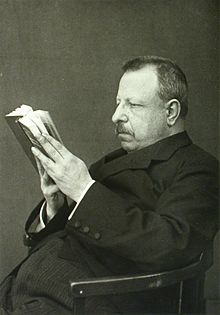
Because when I look into steely eyes like that, I get the distinct feeling
that, hunch and height aside, Antonio Gramsci was a foxy man.
How do you examine the minds of dead people? You work through how they thought – their ideologies – their theories. Why they did what they did. Why you did it too, Antonio.

That’s another draw to the Prison Notebooks – how deadly personal it all was to Gramsci. Boethius had his meditation on fate, and Gramsci had his on revolution.

Gramsci examined the philosophical and psychological perspective of his own revolutionaries, but he did the same for anti-revolutionaries. Not the reactionaries and oligarchs who put him in prison, but the ordinary folks who couldn’t be bothered either way. Why did they desire their slavery as if it were their freedom?

The answer was in a cultural hegemony. People grew accustomed to thinking of particular ideas and moral principles being right, never asking a critical question. Of course, a business owner should pay workers whatever the market value for the job is – that’s more important than whether they have enough for food and shelter.

One example, of course. Weirdly perennial, just in different contexts.

So Gramsci identified how most people’s education, as well as continual messages from the state along different media – newspapers, pamphlets, radio – affected their beliefs. What philosophical ideas they found intuitively sensitive – how our intuitions were trained.

It's almost as though I desperately want to avoid talking about Noam
Chomsky. As if even recognizing his limited legitimacy will bite
into my own growing contempt of the man. I want to nurture that
contempt, caress it, learn to love it, as Chomsky ages into a
growing irrelevance, continuing to rail (deservedly) against the
hypocritical United States government and ruling class, while giving
a total pass to a nationalist dictator increasingly dedicated to
achieving the dream of a white supremacist Eurasian empire.
You could extrapolate the principles into their core concepts. Philosophy, in this application, is about retro-engineering the lesson plan of ideologies. If someone had actually sat down and made a plan for how a state would guide its people,* the philosopher’s analysis would write it.

* We’re talking about human politics and social endeavours. No one can ever plan any of this shit.

Gramsci only got so far with this work for many reasons, one of them being his death. But his work was remarkable. Gramsci had a wonderful analysis of the fundamental concepts of what ideologies are, how they work, and how state and society interacted to develop and express them.

Gramsci also explored how state organs can take control of this mechanism – how they can pressure the natural processes of conformity. How they can not only encourage consent, but manufacture it.

Now I’ve ended with the same joke I did on Friday. Talk about multiple takes.

Kill Your Idols VIII: The Best Raw Deal, Research Time, 17/08/2017

Here is the sort of political activism you need when you understand how complex the relationship between society, culture, and state is.

Your activism has to aim for hegemony. This is more than just control of the state. In fact, hegemony means a lot of different things. The term ‘hegemony’ whose meaning is continuous with present use, began in international relations theory in the 19th century.

Boys at war.
Essentially, the theory that sees all relations between nations and peoples as states at war. Whether by military or some other means. Conquest, dominance, hostility, suspicion, mistrust, fear, and hatred.

The language of what’s called realist IR theory is dispassionate, almost meditative. They talk in terms of interests, calculations of different risks and their mutual impacts, game theory. But I’ve long heard a whisper, an implication in a little too much of this talk, which sounds like little boys in a park playing at war.

Hegemony here is the dominant power – the state at the centre of military and economic power for an entire region or the world. The state to whom every other government pays loyalty if they know what’s good for them.

Antonio Gramsci’s innovation was to adapt the term to a domestic political context. He was thinking of states, cliques of oligarchs or aristocrats, and classes. Hegemony here means the power of a ruling class through the state to force obedience through violence, or else seduce them into it.

This is where those institutions come into play. Most of them – especially in Gramsci’s own time and place, early 20th century Europe – were organs of the state. The different military and police bureaus could force you to obey. One important reason (among many) why Gramsci’s revolution in Italy failed was because the Italian Communist Party thought those violent institutions were all that mattered.

Nothing phallic about this at all.
Consent of the governed is a much more powerful force. Many people who were desperately and inescapably poor under the current way of doing things in 1920s Italy – factory workers, farmers, labourers – simply weren’t up for revolution. They were okay with the way things were.

There are a lot of people who, in situations of terrible injustice, are still okay with things. They can see the real circumstances of wretchedness that the status quo results in, and they’ll just make excuses, or simply act as though it doesn’t matter.

You want an example? Introduce yourself to a middle-class white Canadian from a reasonably affluent suburban community. Ask him about the number of Indigenous rural communities don’t have access to a clean water source.

He’ll be filled with excuses, half of them blaming Indigenous people themselves for not having a basic government service we take for granted everywhere else in the country.

Now why would he believe that? These are ideas that proliferate culturally – in conversations and mass media, whether some media platform or channel is state-run or private. They’re the conversations that condition public morality.

Yeah, I'm going there. At least for a little while.
Powerful institutions, organizations, and sometimes even individuals can control channels and platforms. Effective political activism has to work on all these forces at once. Agitating against unjust government actions isn't enough.

Maybe it’s through direct ownership – the state runs the CBC, Facebook is a company that shapes our online life, several oligarchs become think tank funders or outright buy media companies. Maybe it’s through influence, building a profile in these media or influencing people in states and private organizations.

Together – say it with me now – all these forces manufacture our consent.

So is Noam Chomsky just warmed-over Antonio Gramsci? Pretty much, and not even as interesting. But I think I’ll go into more detail why tomorrow.

Kill Your Idols VII: States Can Be Idols Too, Research Time, 16/08/2017

When I wrote Monday’s post, I was still planning to follow it up with what I’m writing tonight. But I was going to start a new little series. Then I realized that I was still circling around the same problem. I’m jumping into it from different angles. Some work better than others for getting to the point.

That point is pretty simple. It's what I had in mind when I started. Political thinking tends to make an idol of the state, which is dangerous, destructive, and incomplete. What are some ways this idol-casting happens? How can we play Moses to this process and smash that idol before people get too attached to it?

Parliament Hill, one of the institutions that one brand of too-patriotic
Canadians worship. I'm glad we live in a democracy, but we shouldn't
make idols of our institutions and gods of our governments. That
worshipful attitude erodes democracy with scowling, preening
desires to supplicate and submit.
I mean, people are already attached to this idea. It’s the obsessive centre of almost every problem and concept in two separate millennia-old traditions of political philosophy – Western and Chinese. Imagine what would have happened to Jewish culture if God had kept Moses on Sinai for 3000 years.

It would have been a lot harder to break that idol worship than just knocking over a cow statue and yelling.

Antonio Gramsci’s work expresses a powerful tension of this attempt to break up those idols. He was part of a revolutionary political movement that tried to overthrow the Italian state in the turmoil after the First World War.

In prison, he examined how aspects of society that weren’t agents or products of direct state action played a role in their defeat. His major concern was to understand these forces so his successors could take some kind of action on them. Social and cultural aspects of society were the blind spots in marxist thinking until Gramsci realized that his revolution failed because of them.

But it was difficult to grow political philosophy beyond its myopic focus on the state. Here’s an example in Perry Anderson’s essay. One of Gramsci’s focusses in the Prison Notebooks was to examine the ideas of Italy’s leading philosopher, Benedetto Croce.

Benedetto Croce looks like the most
stereotypical early 20th century European
intellectual you've ever seen. Until you look
up photos of Henri Bergson. Oh, fuck.
Croce carried into Italy the mainstream tradition of Germany’s philosophy. His central influences were Immanuel Kant, Georg Hegel, and Friedrich Schelling. His politics followed Kant’s, his thinking on society, culture, and psychology followed Hegel, and his ontology followed (at least one of the several) Schelling.

He was the leading liberal intellectual of the newly-united Italy until his death in the mid-1950s. He'd been a resister of fascism since its early days arresting (like Gramsci) and assassinating left-wing opponents. The murder of socialist MP Giacomo Matteotti in 1924 was Croce’s turning point against Mussolini.

This historical info is all just one level of sourcing away from Wikipedia. I started with Britannica, actually. I’m not all that familiar with Croce’s philosophy – I found Nietzsche much more productive for the directions that I wanted to pursue in my own research. And when I was a student, the courses I took on that tradition concentrated on Kant and Hegel themselves.

Gramsci’s essays in prison engaged with Croce’s philosophy as a political theorist. Croce articulated a tradition of thought that saw the state at the centre of politics, of society, of human existence itself as an ontological principle. In this, he was following a conservative perspective on the ideas in Hegel’s Philosophy of Right.

In Croce’s philosophy, the state – metaphysically speaking – pre-exists humanity itself. The state is an ontological principle universally necessary to harmonious and unified human life. A given society and culture is the expression of the state.

This is a bit much for Gramsci, as it is for us. But I am not surprised that totalitarian politics and philosophy grew in the Western tradition where those right-wing Hegelian ideas were so influential.

Gramsci was concerned to critique this idea that culture was an expression of the state. That presumption that a change in the nature of the state would change the culture was part of what led his own movement, philosophically speaking, to its failure.

So what would this more complex relationship of society, culture, and state be?

Kill Your Idols VI: Needing to Get It Right, Research Time, 14/08/2017

I find it sadly fitting that I’ve spent the last week talking about the complex connections between state violence and fascist militias, then we get hit with an actual fucking Nazi riot. The fascist revolution of America appears to be here.

See, all these thoughts in my all-over-the-place analysis of patriotism’s psychology all had a central point. I’m drifting around a really curious concept of hegemony that Antonio Gramsci develops.

This weekend makes me wonder if the United States of America has
reached a turning point, whether it's no longer possible for extremist
white nationalists and multicultural pluralist democrats to live in the
same country and live loyally to the same institutions. It could be
either the beginning of the end of the American experiment, or the
threshold of a new era of freedom and justice. Or it could end up
being just one more flare-up in a long and terrifying history of
American racist violence.
There’s been a ton written on Gramsci’s concept of hegemony in the last several decades of academic political philosophy. So I don’t want to get into a discussion over whether it was really Gramsci’s, or whether Anderson’s books got it right. Because I’ve been thinking this while reading some of Perry Anderson’s books on Gramsci and the Western left-wing tradition.

He’s a brilliant historian of ideas. The only thing that frustrates me about his work is that he’s such an accurate historian that I have no clue what his own philosophical ideas are. At least not in that abstract sphere of pure concepts.

I read his book on the politics and philosophies of the Indian nationalist movement against British rule, and he had plenty of his own ideas. But those were about political stances – the Hindu-centric nationalism of the Congress Party caused disasters, ethnic cleansing, and immense suffering among Indian Muslims and Dalits.

Anderson is, as you’d expect, not cool with that. His ideas are in the insight of his moral stances in his writing. But when it comes to philosophical concepts, he’s a very meticulous mapper of others’ territory. He doesn’t build his own worlds.

So his map of Gramsci’s concept of hegemony is very insightful. In his long essay The Antinomies of Antonio Gramsci, Anderson was very faithful to Gramsci’s ideas as they are in the text. He even describes them as paradoxical and contradictory because Gramsci developed a very slippery conception of hegemony.

Sometimes, he spoke of hegemony as if it were about state control and influence of other states through the military. Domestically, sometimes he thought of it as state violence. Sometimes, it was the soft power of the state through cultural institutions. Sometimes, hegemony was ideological. Sometimes, it was just a matter of sanctioned gun violence.

It was rather difficult for me to find a good picture of Perry
Anderson where he didn't look kind of depressed. These days, I can
understand where he's coming from.
If the meaning of a term seems to contradict itself, then it can’t be valid. Fine for a historian, but it’s a rule that makes for terrible philosophy. Oddly enough, Anderson's big history book on the Western Marxist tradition more generally tends to give Gramsci more slack on this hegemony concept. Maybe because his focus is on how the concept changed over time and place.

Look again at all those definitions of hegemony that occur across the Prison Notebooks. What do they have in common? The projection of power as the ability to control and influence. There’s always a hub to that projection, a centre of power.

That power centre is sometimes very blunt, and its projection simple and direct. Think about the Russian Revolution of 1917. It could succeed relatively easily (once it got super-lucky) because there was only one vector of power – from the Czar to the masses through the aristocracy and military elite.

Power centres can also be dispersed. Think about a country and society like the contemporary United States. Institutions and networks of influence all over the country spread a morality of patriotism, love of country and the institutions of the state.

Americans don’t believe in this simply as a matter of following orders – schools, television networks, cultural industries of all sorts spread the moralities of American patriotism, America as an ideology. That ideology itself can come in contradictory forms – racists and pluralists can exist in the same country. They have for centuries.

They’re loyal to the same institutions – American democracy, just as Alexander Hamilton and James Madison described in the Federalist Papers. Even though they believe in radically different moral visions of what those institutions should do.

But it’s always a network of control and influence with a hub, the state institutions themselves. That’s the most philosophically tantalizing take I can find, figure out, or think of for Gramsci’s concept of hegemony. It’s the one that I’ll use in my own work.

Hegemony as the dominant projection of loyalty to a state.

Kill Your Idols V: The People's Violence, Research Time, 11/08/2017

So what do you do with a few million people who unconditionally and uncritically love their country?

It’s a legitimate question to ask. A lot of people seem to have forgotten that straight-up patriotism and paranoid jingoism was once the most frightening political current surrounding the White House. Those were the days.

The September 11 attacks and George W Bush’s reaction to them was the cataclysmic engine of this whole messed up century. Millions are dead and the world has been radically transformed through the events that the attack and W’s war set into motion.

I thought we'd remember George W Bush as an epochal man, the 20th
century's first bumbling monster. Yet how quickly he's been forgotten,
overshadowed.
Back then, I saw this orgy of patriotism as an act of love for the American state, its military, and George W Bush. When I would see how patriotic, viciously pro-war American people acted on questions of politics, I did see some weirdly sublimated acts of love for those bombs.

I was disturbed and depressed at the knowledge of millions of dead Iraqis in a terrifying insurgency. I knew that, as far as the Middle East was concerned, this was the beginning of – minimum – two decades of conflict.* But I was sure that the effects on American culture at least were limited to aggressive country music criticism.

* Right now, I’m betting on four decades. So we’ve got about 25 years to go. Time to start getting ready for some serious refugee movements. I doubt we’ve seen the end yet.

Now, we’re dealing with a genuine authoritarian takeover of the American government to render it a one-party state, and a radical white nationalist political element (with unnerving shades of anti-Semitism) dominating the White House.

Donald Trump’s politics aren’t only about state-based authoritarianism through immigration crackdowns, unrestrained police violence, and a revived War on Drugs.

Independent militia groups on the far right are growing fast. Now, when I read Anderson’s book on Antonio Gramsci, there’s a discussion of the pro-fascist militias of 1920s Italy. Even though Anderson was writing this book long before Donald Trump was even on TV, his words engaged with the same problem of whether patriotism would inspire popular violence.

Because it's a penis, Donald. It's a giant penis.
Gramsci himself gave an account of the social power of patriotism to inspire violence. In Italy, these gangs of young and middle-aged men would attack socialists and other left-wingers.

Now these gangs got a few kickbacks from the fascist government and many graduated into the police and the military. So Anderson concludes that the gangs were effects of the state. It’s a kink that I see in his thinking – very twentieth century. As soon as the state’s action appears in any social situation, it dominates that situation.

But the militias weren’t like that. In a way, they co-opted the state. Those militia groups in Italy had existed since the end of the First World War. Mussolini’s coup was an independent radical nationalist militia group that overthrew the Italian government through an armed insurrection in the heart of Rome.

Radical white nationalist militia groups have existed in America pretty much since the Reconstruction and advent of Jim Crow laws. The Trump campaign for President was when the core media personalities and executives of American white nationalist media took over the executive branch through their faction of the Republican Party.

Nationalism is patriotism twisted into a screech of racializing bloodlust. Patriotism is a function of popular morality. The state inculcates it through education, but once it’s a popular morality, its development is beyond state control.

In Italy, the radical nationalists wear their best suits to overthrow the
government. Steve Bannon can't even put his shirts on straight.
Governance through legislation and policy means that intentionality is always an aspect of state systems. Its action can never be chaotic – its capacities are primarily in direct action. That’s a great vulnerability.

The possibility of revolution, in fact. People organizing themselves politically into a dynamic movement – a morality spreads, consciousness of that shared morality spreads, and people coordinate direct action for change in their society and institutions.

In 1920s Italy, all the communists knew, from their theories, that their revolution was coming. Then Mussolini marched on Rome.

I remember how happy I was when Barack Obama was elected. The deranged patriotism of the Bush years looked like it might be coming to an end. Then Donald Trump brought the Birther Movement to national television.

Kill Your Idols IV: Let Daddy Hurt You, Research Time, 10/08/2017

That’s probably my ickiest title in the history of the entire blog. We live in icky times.

But the past few posts about the ideas I had reading Perry Anderson’s book on Gramsci, comparing it to my own notes on the Italian have returned to the central critical question of Utopias. Why do we fight for our slavery as if it were our freedom?

One critical question we in democratic countries should always ask is this: Are we democratic enough? Or can we build a more free and prosperous society?

You know you live in a pretty damn democratic society when your
public broadcaster devotes money and a really solid time slot (at least
in its first season) to a show as weird and deranged as Kenny Vs
Spenny. Plenty of powerful countries devote their public
broadcasters to ridiculous propaganda.
Once we start taking that question seriously, we can ask another one, a matter of strategy and planning for our real-world activism for more democracy: What makes people love our country when we could be so much better? What’s the ground of a population’s loyalty to a country?

Antonio Gramsci found himself asking that when he was imprisoned by a government far more brutal than any government we have in Canada,* which inspired incredibly loyalty among Italy’s population.

* Well, non-Indigenous territory in Canada. Our federal government isn’t very kind when it comes to governing them. Our leaders have mostly blamed poor Indigenous people for the pathetic state of basic infrastructure that our government built.

We were taught all our lives since elementary school that Mussolini was a monster. But for most of the two decades he ruled Italy, Mussolini’s popularity as a political leader could go as high as Justin Trudeau’s and as low as Donald Trump’s. But that’s still the support of millions of Italian citizens.

Gramsci’s analysis is rooted in the powers of the state. It’s how, in part, he develops his concept of hegemony. He accepts the idea that one of the central powers of the state is violence. We all learn in basic political theory that the state is the only agent of legitimate violence in a society.**

One day, maybe we'll remember Donald Trump the way Italians
remember Mussolini. With ironic kitsch paraphernalia and
deranged media mogul politicians admiring his virility. Oh God.
** Too bad we’re never asked in those basic political theory to discuss why even state violence is legitimate in the first place. Seems an even more basic question to me.

But it’s all too easy to think of violence as the only function of the state that matters. Think back to the Russian state’s vulnerability in 1917. Hell, how about the Syrian, Libyan, Egyptian, and Tunisian state’s vulnerability five years ago!

When the only way a state can actually encourage the population’s loyalty is violence, it’s already lost. Or at least, there’s not much beyond revolution, or civil war, or both as the only ways forward. Violence and the threat of violence is a very ineffective weapon precisely because it’s so destructive.

Most of the work of loyalty building for the state doesn’t come through its violent institutions. The most efficient institutions of loyalty are the soft power institutions. Schools, naturally, are the most powerful – we learn the national anthem, basic stories about Canadian history and culture, Canadian values.*** We learn it all as children, impressionable creatures whose basic habits and personalities can still be moulded.

*** Maybe they’re left-wing Canadian values of universal brotherhood in infinite combinations. Maybe they’re right-wing Canadian values of more conventional patriotism. Still Canadian.

It has never gotten less subtle.
Plenty of other state institutions help take care of this value-building process too. Public broadcasters for news and entertainment, film development boards, and museums. Working together, schools and cultural institutions are powerful tools to weave patriotic loyalty into a population.

Deeply democratic cultures and governments let their state-run cultural and education institutions bring up problems the country faces – for instance, poverty or a past of crimes against humanity. But these institutions can also be used for pure indoctrination. Of course, they’ll work best if they’re subtle about it.

Still, indoctrination from such powerful institutions can sometimes be so heavy-handed it’s a form of violence itself.

When all these institutions of soft power and values training have done their work, you have a significant chunk of the population whose political reflexes are their belief in the unconditional good of the country.

Now what do you do with those people?

Kill Your Idols III: Why You Love Your Country, Research Time, 09/08/2017

So things got away from me a little bit yesterday. It happens sometimes. Part of the experimental nature of the blog. I think I swung a little too fast and loose from the very abstract to the straight-up historical. Then I think I swung back again.

In 800 words. That’s what I call whiplash.

Freedom to say what you wish and turn back the most monstrous ones
with the light of truth. A society that allows you this fosters the
strongest patriotism.
Let’s talk history, and what we can learn from history. What Antonio Gramsci learned from the history that just got him thrown into prison. One more pass.

For Lenin to win out in the Russian revolution, all he needed to do was break the aristocracy. More accurately, take advantage of a breaking aristocracy.

For Gramsci to win out in an Italian revolution, he would have needed the following sectors and interest groups of his country to collapse simultaneously. 1) The aristocracy; 2) All the other political parties; 3) The business and merchant elite; 4) The social democratic trade unions; 5) The military; and the fraying of all the friendships and professional bonds across all these groups and institutions.

I should also mention that an Italian revolution would have needed to unite a drastically divergent regionalism in a country that had only been a single state for about 40 years by the time Mussolini took over.

That’s what I mean by redundancy in a society’s networks. There’s a special relationship in democratically-governed states, which gives an extra strength to those networks. Democracy.

All of popular culture – or at least enough of it to be unavoidable – gets consumed by political discussions. Party alliances, policies, philosophies, the place of your country in the world, the place of you as a citizen in your country.

We must have the right to yell. There's no more powerful human
freedom.
The process all ends with this massive public ritual of the vote – you mail your ballot or mark one at a live location, then everyone gathers around the media of their choice to watch the results. The aggregate of all those ballots actually determine who occupies important government jobs.

All those conversations about politics – both among people and from government and institutional sources – serve a major purpose. They disseminate and accustom people to the public morality of representative democracy.

It’s the most impressive way to earn legitimacy for your state institutions – actually get them involved in discussions about how those institutions should be run. In a democracy, you’re free to have conversations that let off steam in public about your frustrations with the government. As well, you feel like your ideas can contribute in some small way to how your government is run.

That’s the foundation of a powerful personal investment in your government. When you have this emotional connection to the state, you feel like you’re part of it, and it’s part of you. The state matters to you when you can participate in its work and decision processes. Even if ordinary citizens can’t do that much, just that small amount builds so much love and loyalty.

Even if you’re offering a better idea than any of the options the state has available, that loyalty is seriously difficult to overcome. Maybe even impossible. Democracies never fail when citizens feel like they can take part.

I wonder how people can accustom themselves to a police state. To me,
living in such a society feels like living with a constant, never-ending
skin infection all over my arms that caused the most horrific itching
all the time. That is how much my soul would chafe and dry out.
They’re overthrown in wars and military coups, but that’s usually a matter of force. It’s not a revolution. A revolution is a popular overthrow of the state. Do you expect a people to overcome their own love, when they really love their country?
• • •
I once met a guy who was legitimately considering working for Bashar Assad’s government. He was fascinating in some ways, but in others, he was the most boring man I’d ever seen.

Any public statement he made about political matters was an empty platitude to the value of humanitarianism. There’s no PR copy more vapid and dull than what comes out of the mouth of a dictator’s loyalists.

“Hey, man, don’t you love your country? I love my country. You should love it too.”

A friend of mine got that line from a secret police agent. Thinking about my conversations with Assad loyalists, Syrian democrats who’ve had to put up with Assad loyalists, I realized something about democracy.

By encouraging people to think about politics in deep, complicated ways, as if your decisions could effect the course of your country, you make smarter, more adaptable, loyal, enthusiastic, patriotic, and generally just plain better citizens.

The open question – Do you want your country to have citizens?

Kill Your Idols II: Power to Which People? Research Time, 08/08/2017

Does the world run like a clockwork, with simple, easily predictable events and processes? Reality is really much more complicated than that.

We may be able to understand the underlying mathematics behind how the world changes, but the relationships of all those actual, ongoing processes cause so many dynamic effects that it becomes computationally impossible to account for them all.

Predictions only occur in laboratory conditions – pristine environments where all relevant processes are controlled. The world is no laboratory. Too much is beyond our control once all the world’s ongoing processes start interacting with each other.

A representation of Ananke, the Greek Pagan name for the necessity
of reality itself, the determination of fate.
Okay, now let’s scale back a bit from the abstract. Step down from this web of time analysis and look at some real historical situations here. That way, we can see how tripped-out abstract thinking is directly and practically relevant to material matters of politics and life.

Let’s go back to Italy in the 1920s. My grandparents are children growing up on farms in the middle of nowhere in Calabria. They know nothing of this, even though this political instability will lead to the wars that determined their coming of age.

Antonio Gramsci is arrested by Mussolini’s fascist dictatorship, as one of the leaders of the Italian Communist Party. He’d eventually die in fascist custody, thanks to the failure of his health in their wretched prison conditions. While dying slowly over ten years, he writes a masterpiece of political philosophy.

He’s wondering where he went wrong. If the time of successful revolutions to build communist societies had begun, why were all the ones in western Europe shut down?

Marxist orthodoxy in early 20th century Europe was that the factory-based proletarian labourer class would gain consciousness of themselves as a class, including their raw deal under capitalism, and that the Communist Party vanguard would lead them into a whole new economic system.

The first I ever learned about the Russian revolution was the story
of Doctor Zhivago, which was one of this movie nerd's favourite
films, even when I was a young kid. The film had an intense hold
on me, sucking me into every scene even though it was nearly
three hours long and I saw it for the first time when I was nine.
That sounds awesome! It never happened. Not even in Russia, where you had an actual Communist Party’s revolution actually being successful.* There was no factory-based economy there to speak of. Most of the country was agrarian and pretty much feudal.

* Sort of. Heavily crippled by a massive civil war in which every major western European power sent armed battalions to help put down Lenin’s government. Causing Lenin so much stress that he died of a stroke shortly after the civil war, and was never able to build institutions around community workers’ councils. Josef Stalin just built a huge secret police state with a bunch of massive collectivized farms. Fuck.

The Russian Revolution itself broke from the doctrinaire marxist script, the script that said human economics and society had a life cycle as natural as an oak tree.

The end of capitalism would come from the industrialization of society and its breakup into a 1% of oligarchs and a 99% of slave-wage factory labourers. The labourers realize their raw deal and the force of their numbers, overthrow the oligarchs, and govern society equally through workers’ councils. The ever-more abundant production of industry would lift everyone out of poverty and we’d live as equals.

Yet the first successful revolution was in a feudal economy, because Czarist Russia had a social division of oligarchs and slaves even more stark than the England whose industry was Marx’s own model for Capital.

To understand time, you mustn't think of it as a necessity, as clockwork,
but as the collision of processes, where even the smallest change
alters the entire system.
European industrialization had taken a turn away from the extremes of the 19th century. Their societies stayed complex, or developed new complexities as the old loyalties and identities fell away. Politics never reduced all the way to economic classes anyway.

Gramsci was stuck in prison trying to figure out why the world wouldn’t go according to the script. Why the conditions of a successful revolution were so different from what he encountered.

Gramsci wrote the template to reintroduce contingency into the marxist tradition of thought. He did more than just do that, though. Because you couldn’t just deny necessity. That becomes a shouting match.

No, Gramsci had to reveal to everyone who philosophized about politics and society the source of contingency in the human realm. That source was the mind of humanity itself, when we all think and talk together. That source is our ethics, values, and morality. It was philosophy in action in the thoughts of every member of a community.

So yeah, no big thing to figure out there. . . . To Be Continued

Kill Your Idols I: Followers, A History Boy, 07/08/2017

When I first started blogging my early research for Utopias, I was concerned to stay away from conventional marxism. I was going to write a very left-wing book, but it wasn’t going to stick to the typical answers of the left.

Yes, I was concerned about oligarchy, just as I am now. I’ve since developed a more communitarian side to my political thinking – the strength and resilience of social networks and bonds of brotherhood throughout a community are the foundation of a healthy culture.

All the typical nationalist idols – religion, ethnicity, language, beliefs in national myths – don't mean shit, if I can put it in technical terms. Solidarity is built from actual friendships among people – from working, playing, clubs, school, partying, volunteering, whatever. The resilience of a society’s networks are its strength.

The basic idea of this series of posts is: If you want to
progress your society, and how you understand the
world, you need to kill your idols.
When I started this blogging project four years ago, I was still sorting out my more political ideas. At the time, I often said I very much wasn’t marxist, for a variety of reasons.

Here’s one anecdote from the time. When I got my proposal reviewer’s notes from Palgrave on Ecology, Ethics, and the Future of Humanity, he kept on talking about marxism, and telling me I should include more marx in a book about environmental philosophy.

He did that because the word ‘alienation’ is really important in a lot of environmental ethics approaches. They’re talking about the different ideologies and concepts humanity has used to separate our self-image from nature. We literally make ourselves alien to the Earth.

But this reviewer kept thinking I was a marxist. All he knew of the idea was Marx’s conception of alienated labour.

At first I was nervous that my book would be rejected because of this misunderstanding. But I got some good advice from my colleague who’d connected me with Palgrave. So I gave my usual response to reviewers who clearly didn’t know what they were talking about. I told the book series editor that the reviewer had no idea what he was talking about.

The bigger question is: What does it mean to be a marxist anyway? I don’t think I’m one, but most folks on the right wing of politics today would call me a cultural marxist.

See, I’ve met some self-identified communists and marxists over the years who are kind of genuine in their very doctrinaire belief in the very basic processes Marx himself was describing. Some see the economy as continuing to cleave into producers and proletariat. Some believe that they can affect a revolution of the working class from an academic’s office.

But people in the communist movement believed all this in Antonio Gramsci’s own time, nearly 100 years ago. They thought that all of Europe was going in the direction of the Russian revolution because they believed in a very doctrinaire marxist theory of the totally deterministic nature of human history.

They ended up being horribly wrong, and a lot of them – including Gramsci – paid the price with their freedom and their lives. Why would someone believe something just because it’s in a theoretical, scientific book?*

* That’s a very complex, multifaceted book that’s open to many interpretations. Most of these folks were following a blueprint from Capital, and Capital was never meant to be a straight blueprint in any universal sense. Yet it still became one.

Here’s the truth about social change. Revolutionary change can come from anywhere in society, if the particular conditions are right to enable some class or community to understand that it can act, then actually act.

Civilization is dynamic, always open to change, never clockwork in that too-simple sense of how people used to think about reality. Am I giving people too much credit by not presuming them to believe in a clockwork reality? . . . To Be Continued

Replicating Glory III: The Material Details, Research Time, 04/08/2017

How to revolutionize a society so densely layered with different classes, business and civil relationships, political parties, cultural communities, trade unions and associations.

You know what civil society is? Redundancy in the social networks of an entire country. It does for societies what redundancy structures do in electrical power grids and different server hubs of the internet.

Let’s contrast Czarist Russia during the First World War. There was only one way to inculcate a sense of loyalty to the Czarist state – fealty to the class hierarchy of the Russian aristocracy. Break the people’s faith in that, and you’ve got a nationwide civil uprising.

The progressive politics of mid-20th century Western liberalism
transformed Canada from a polite northern jewel in the crown of the
British Empire, into a culturally more independent country. The
cultural currents led into Canadian state politics by Lester Pearson
(liberal internationalism), Pierre Trudeau (personal liberty), and
Tommy Douglas (brotherhood) literally built the new national
ideology of the Canadian people.
Now look at a society like Canada today. We’re a democracy with regular elections and media highly critical of government. And we have plenty of media criticizing our oligarchical class. Reporting on corporate crime is a popular demographic.

We’re also highly multicultural and permit people to speak whatever language they want in their private lives, and worship freely as long as nobody gets hurt. There are many places in the world where this never happens.

My country is also built on terrible injustices, like the slow, creeping, institutional genocide of Indigenous people. That’s what the Canadian state was designed to do in 1867.

The liberal reforms of the Pearson-Trudeau-Douglas era of Canadian leadership made some major progress on the foundations of a plural society. My generation is on the verge of a similar step, overturning the popular racism against Indigenous Canadians. Like the 1964-84 social revolutions, Indigenous liberation will probably take at least that long.

We’re in year five, if you’re counting.

But look at what this happy, diverse, plural, democratic society has – so many ways to become loyal to the Canadian state. As Antonio Gramsci would say, so many ways I’m loyal to a capitalist power structure.

I just described the exact way I’m loyal to the Canadian state, or at least the institution of Canada. I’m not about to overthrow the state of Canada and its entire economic system, like Lenin in 1917. I’m ethically invested in Canada.

Canada today is facing another revolutionary pressure, just as the
country did in the 1960s. That's the movement for Indigenous
liberation and reparations. It will mean tearing down the last,
most brutal and cruel institutions of the British Empire in Canada:
the reserve system and Indigenous race laws. We'll need leaders of
the same mettle as Douglas, Pearson, and Trudeau Sr. Will Justin
Trudeau have the same fortitude?
I doubt it. Let me put it to you this way. I think the best modern
philosopher to use in understanding Justin Trudeau is Jean
Beaudrillard. Justin Trudeau: the world's first hyperreal PM.
That’s what I mean about redundancy. There are so many different ways to be loyal to Canada that someone like me can exist peacefully with someone like the arch-nationalist, army-worshipping, neo-Loyalist Stephen Harper. He didn’t have to kill me to take power. I’m just in the NDP.

Back in Russia in 1917, the only way you could ethically invest yourself in Czarist Russia was to be loyal to the Czar and subservient to the landed aristocracy. One quick strike in a weak moment and the whole structure could fall to pieces.

If one path to ethical investment in multicultural democratic Canada falls apart, there are still plenty of other routes for the country to earn people’s loyalty. That’s why you need a ‘war of position’ in Gramsci’s terminology.

You need to be a strategist, exploring and analyzing each of these routes of loyalty to Canada. You have to look at each path to a person’s ethical investment in the country and the way things are (or could be with tweaks). Their structure, and their dynamics – the ways in which those loyalties can change but remain strong.

An activist and an ethnographer. A philosopher’s critical eye on ideology with an expert communicator’s power to make people of all stripes understand it. A social scientist who’s also an ambitious experimenter in society. That’s what you have to be to win the ‘war of position.’

That’s a bit of a tall order for a resumé. I think I can understand why this has not been very successful. That’s why Gramsci seems like such a pessimist, I guess.